How to Get Rid of Ticks in Your House
A tick indoors is unsettling, but usually it is a hitchhiker that rode in on a pet or your clothes, not an infestation. Only one tick, the brown dog tick, can actually breed inside. Here is how to clear them and tell which situation you have.
Step by step
- 1
Find the source, usually a pet
Ticks almost always ride indoors on a dog, a person, or clothing. Check pets thoroughly, especially around the ears, neck, and toes, and check yourself after time outdoors. Most single indoor ticks are hitchhikers, not an infestation.
- 2
Treat your pets
Talk to your vet about a tick preventive for every dog and cat in the home. Clearing ticks off the house while an untreated pet keeps bringing more in is a losing battle. Never use dog products on a cat.
- 3
Vacuum thoroughly, then throw the bag out
Vacuum floors, rugs, furniture, and especially cracks, baseboards, and pet bedding areas. Empty the canister or seal and discard the bag outside right away, so anything you picked up cannot crawl back out.
- 4
Wash and hot-dry fabrics
Wash pet bedding, throw blankets, and the clothes you wore outdoors in hot water, then dry on high heat. Heat is what actually kills ticks; a cool wash alone may not.
- 5
Declutter and seal entry points
Reduce hiding spots by decluttering, and seal cracks and gaps around baseboards, windows, and doors. This matters most for the brown dog tick, the one species that can breed indoors.
Is it an infestation?
Probably just a hitchhiker
One tick now and then, usually after someone or a pet was outdoors. Remove it, do a quick check, and treat your pets. No infestation.
Possibly a brown dog tick infestation
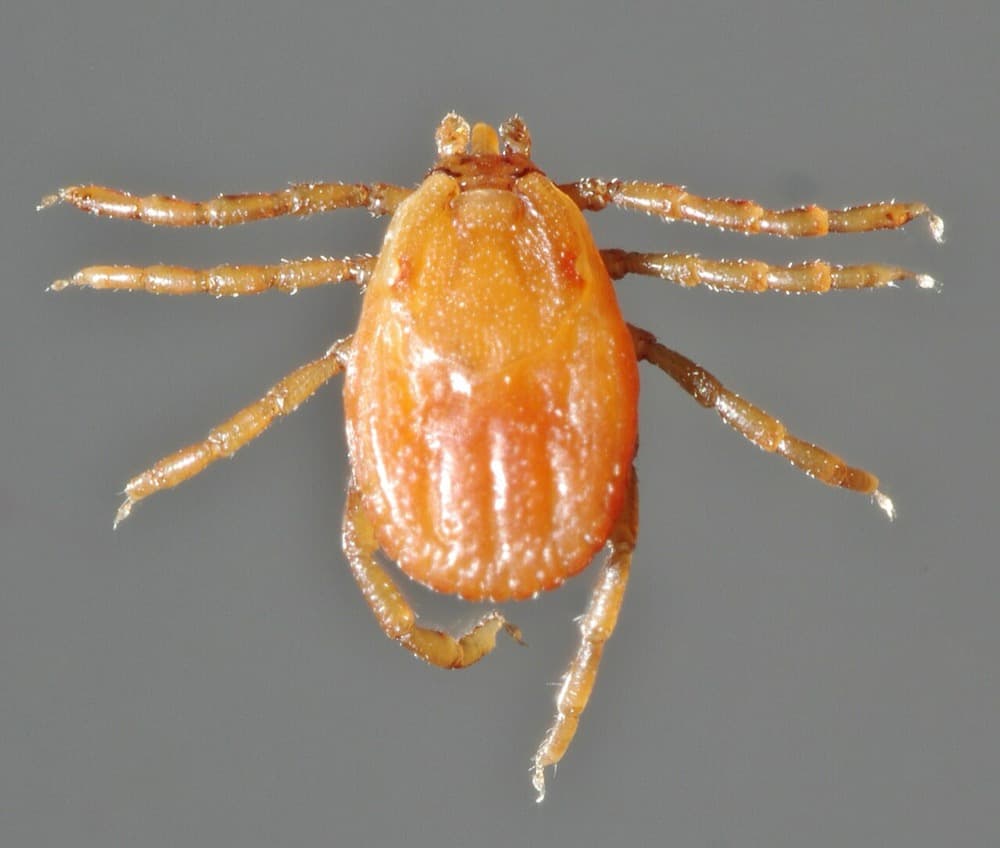
Repeatedly finding the same plain reddish-brown tick indoors, or on a kenneled dog, points to the brown dog tick, the one that breeds inside. Treat pets and the home together, with a pro.
Black bugs that look like ticks, but aren't
Plenty of small household bugs get mistaken for ticks: carpet beetles, bed bugs, spider beetles, and bird or poultry mites. The quick test is legs and shape. A tick has eight legs (six as a larva), a teardrop body, and no antennae or wings. If your bug has antennae, wings, or a hard beetle shell, it is almost certainly not a tick.
Dealing with an infestation?
A brown dog tick infestation rarely clears from cleaning alone. Get a free, no-obligation quote from a vetted local pest-control pro.
Frequently asked questions
- How do I get rid of ticks in my house?
- Find the source (usually a pet), put every dog and cat on a vet-recommended tick preventive, vacuum thoroughly and discard the bag outside, and wash and hot-dry pet bedding and outdoor clothing. For a true infestation, which almost always means the brown dog tick, treat pets and the environment together with help from a pest-control professional.
- Can ticks infest a house?
- One species can: the brown dog tick, which can complete its whole life cycle indoors and build up in homes and kennels. Our other common ticks cannot breed indoors, so finding one is usually a hitchhiker that came in on a pet or person, not an infestation.
- Is it an infestation or just one tick?
- Finding a single tick now and then, especially after time outdoors, is normal and not an infestation. Repeatedly finding the same reddish-brown tick indoors, or finding them on a kenneled dog, points to a brown dog tick infestation that needs both veterinary and pest-control treatment.
- What are the tiny black bugs in my house that look like ticks?
- Several household bugs get mistaken for ticks: carpet beetles, bed bugs, spider beetles, and poultry or bird mites. Ticks have eight legs (six as larvae) and a teardrop body with no antennae or wings. If it has antennae, wings, or a hard shell, it is probably not a tick. Compare it against the identification chart to be sure.
- Do I need a professional to get rid of ticks indoors?
- For a stray tick or two, no; the steps above are enough. For a brown dog tick infestation, yes. These build up in cracks and bedding and rarely clear from cleaning alone, so a pest-control professional working alongside your vet is the reliable fix.