Tick Identification Chart

The ticks that bite people in the Northeast, side by side. Use the photos, size, and markings below to tell them apart, and remember the one that matters most: only the deer tick carries Lyme disease.

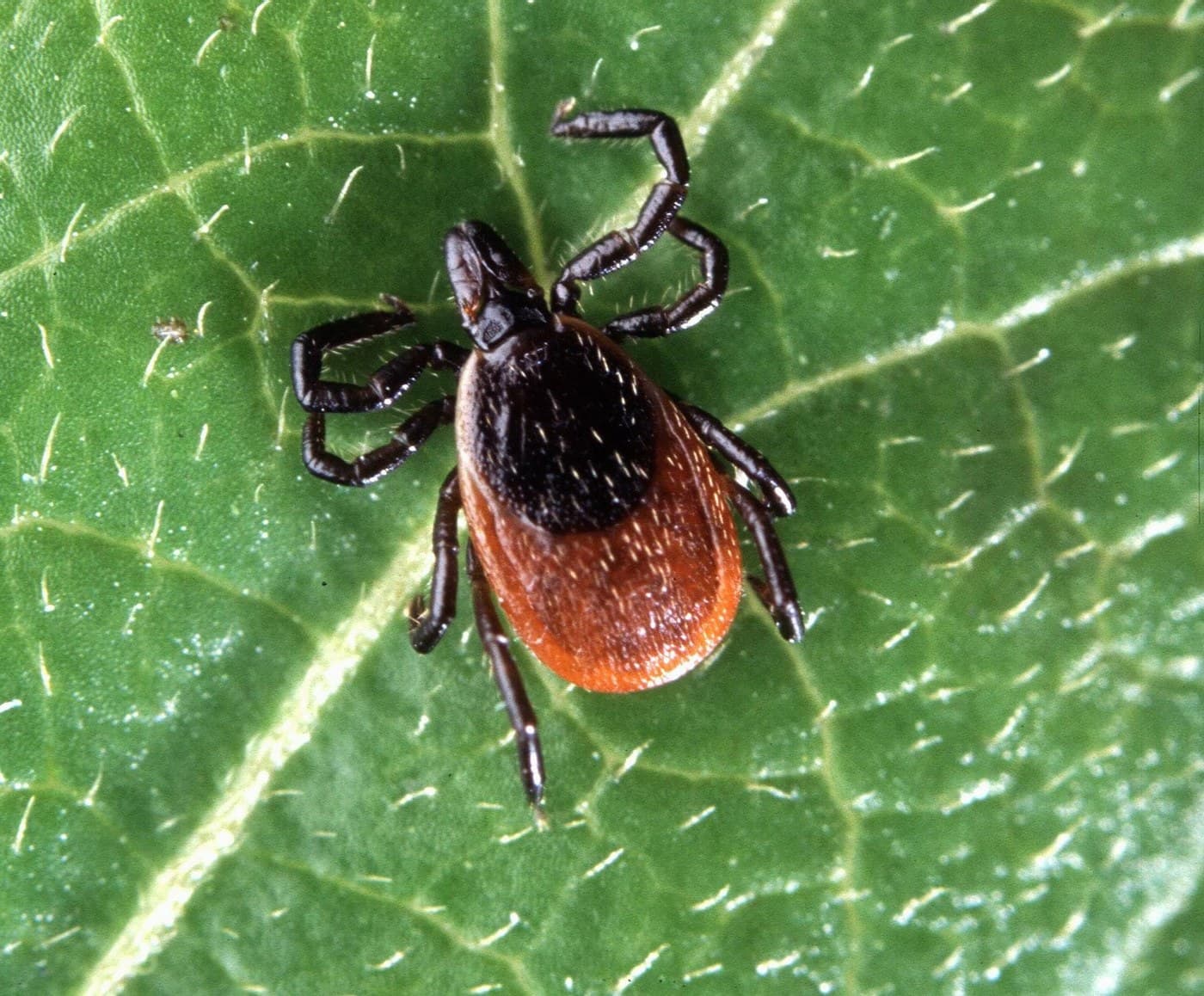
Female deer tick (blacklegged tick) on a green leaf, with a reddish-orange body, dark shield, and black legs, no white markings

Deer tick

Ixodes scapularis

Carries Lyme
Size:
Small, a sesame seed (nymph: a poppy seed)
Look for:
Reddish-orange body, solid dark shield, black legs, no pattern
Carries:
Lyme, babesiosis, anaplasmosis, Powassan
Full deer tick guide →
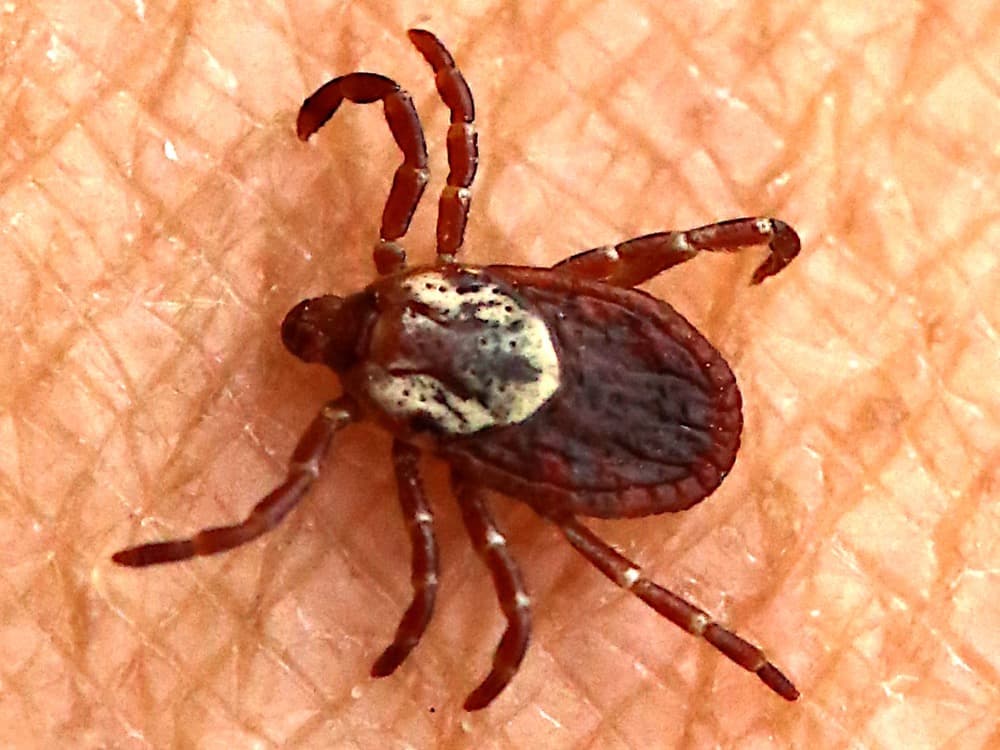
Female American dog tick with an ornate off-white and brown mottled shield behind the head

American dog tick

Dermacentor variabilis

Size:
Larger, an apple seed
Look for:
Brown with an ornate off-white mottled shield
Carries:
Rocky Mountain spotted fever, tularemia (rare)
Full american dog tick guide →
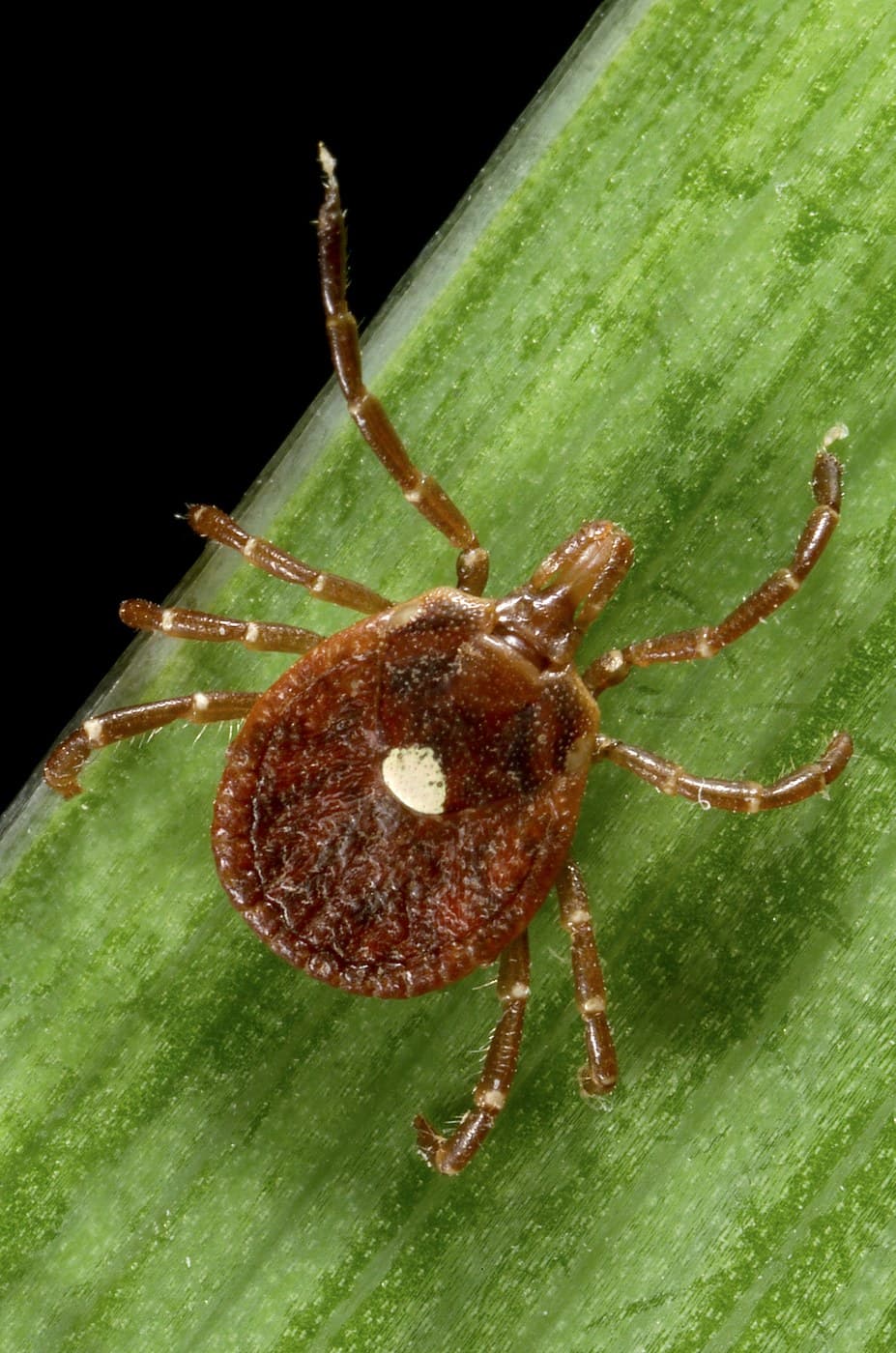
Female lone star tick on a green blade of grass, reddish-brown with a single bright white dot in the center of its back

Lone star tick

Amblyomma americanum

Size:
Medium, rounded
Look for:
Reddish-brown; female has a single white dot on the back
Carries:
Ehrlichiosis, STARI, alpha-gal syndrome
Full lone star tick guide →
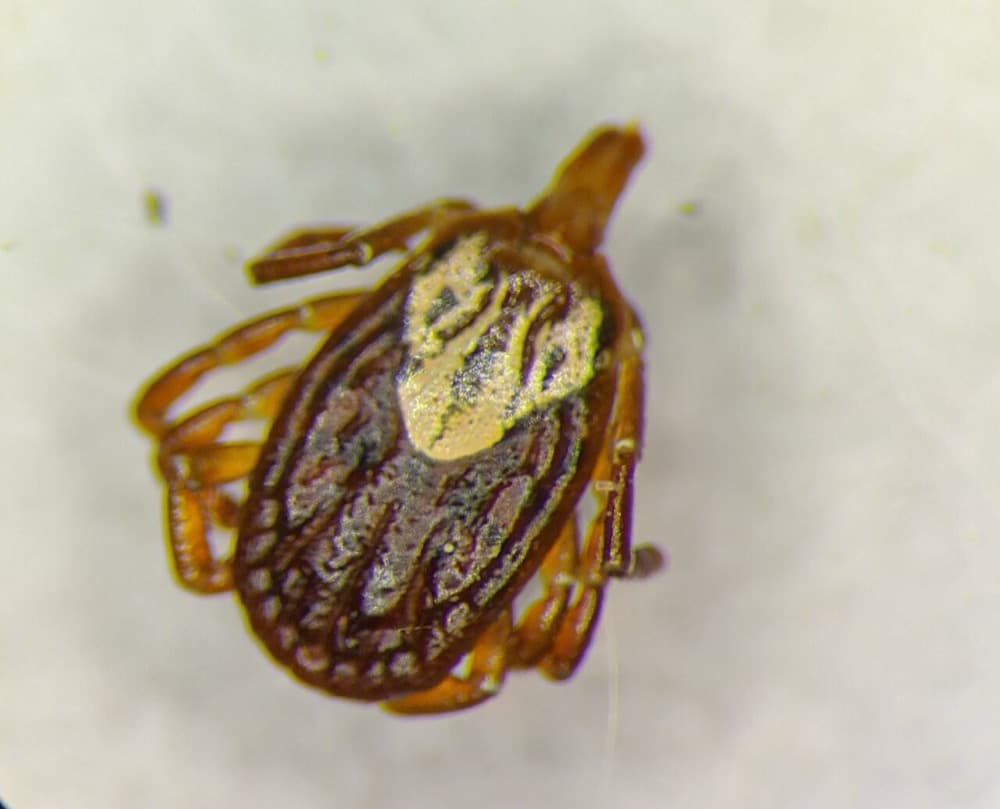
Female brown dog tick, uniform reddish-brown with no distinct markings

Brown dog tick

Rhipicephalus sanguineus

Found nationwide, the one tick that infests homes and kennels indoors
Size:
Medium, narrow body that tapers toward the head
Look for:
Uniform reddish-brown, no ornate markings
Carries:
Rocky Mountain spotted fever, canine diseases
Full brown dog tick guide →
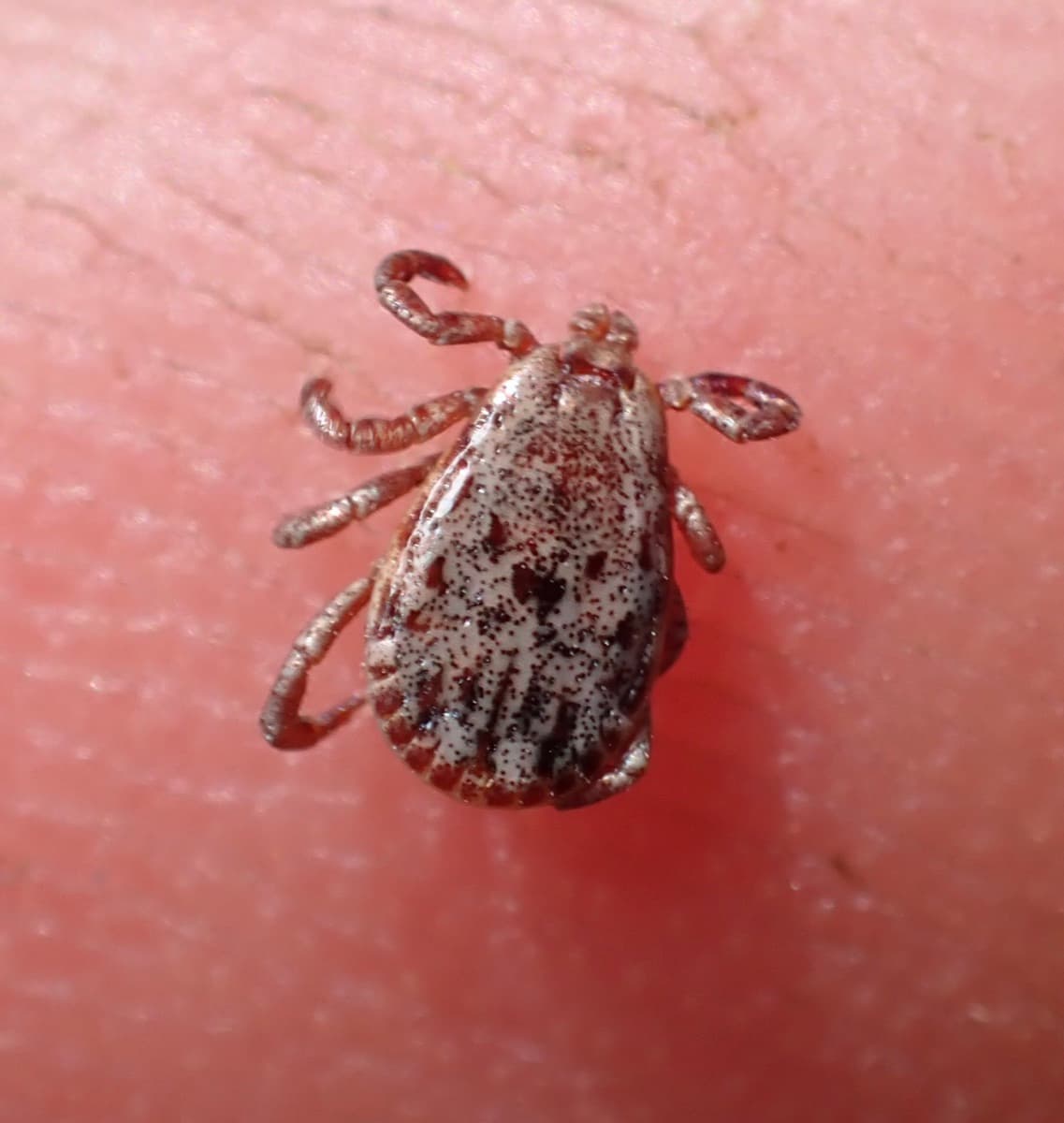
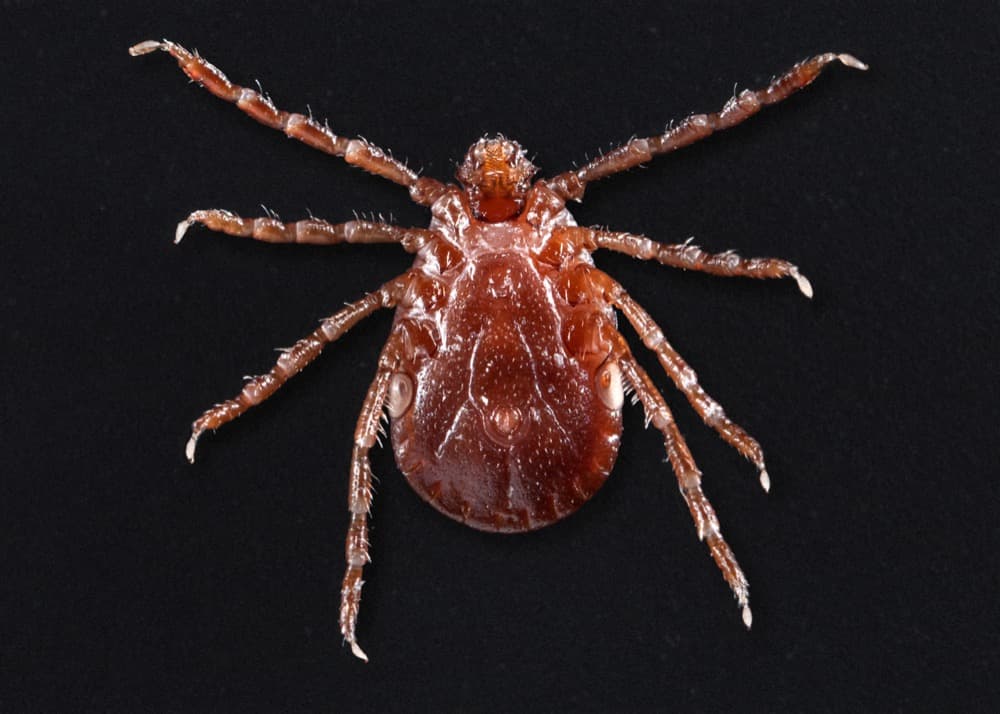
Female Gulf Coast tick with an ornate silvery patterned shield

Gulf Coast tick

Amblyomma maculatum

A southern tick spreading north into the mid-Atlantic
Size:
Large, bigger than a lone star
Look for:
Silvery ornate markings on the shield, no single dot
Carries:
Rickettsia parkeri spotted fever
Full gulf coast tick guide →
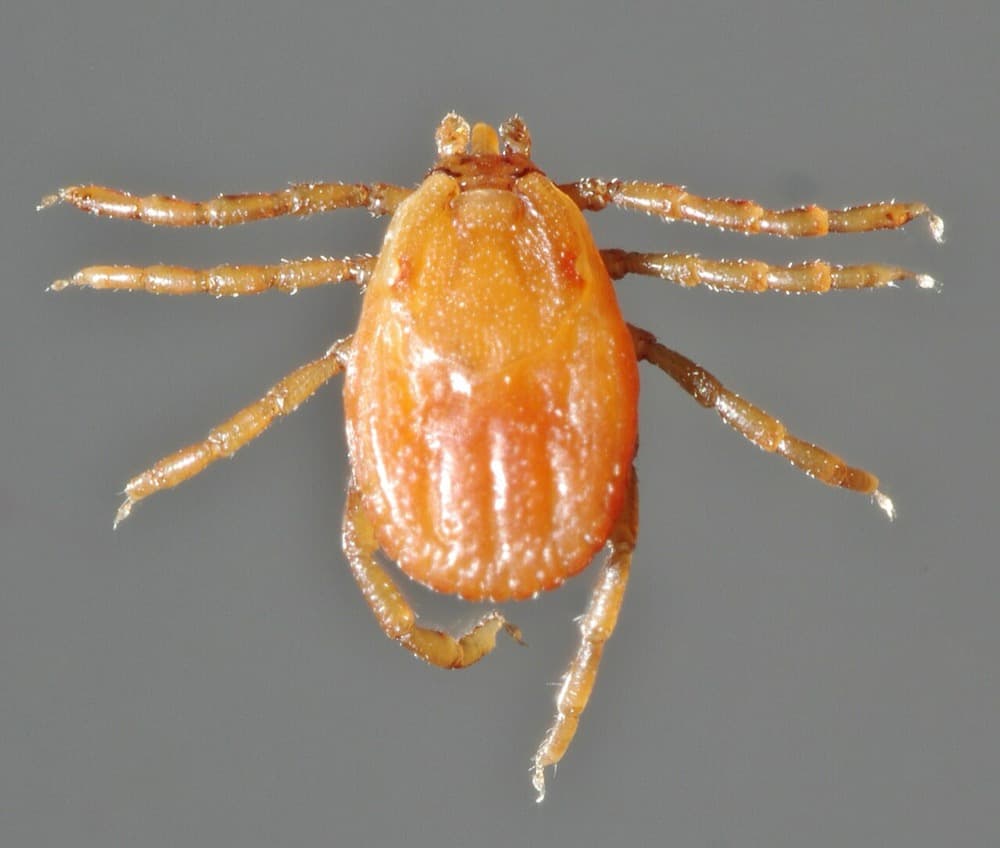
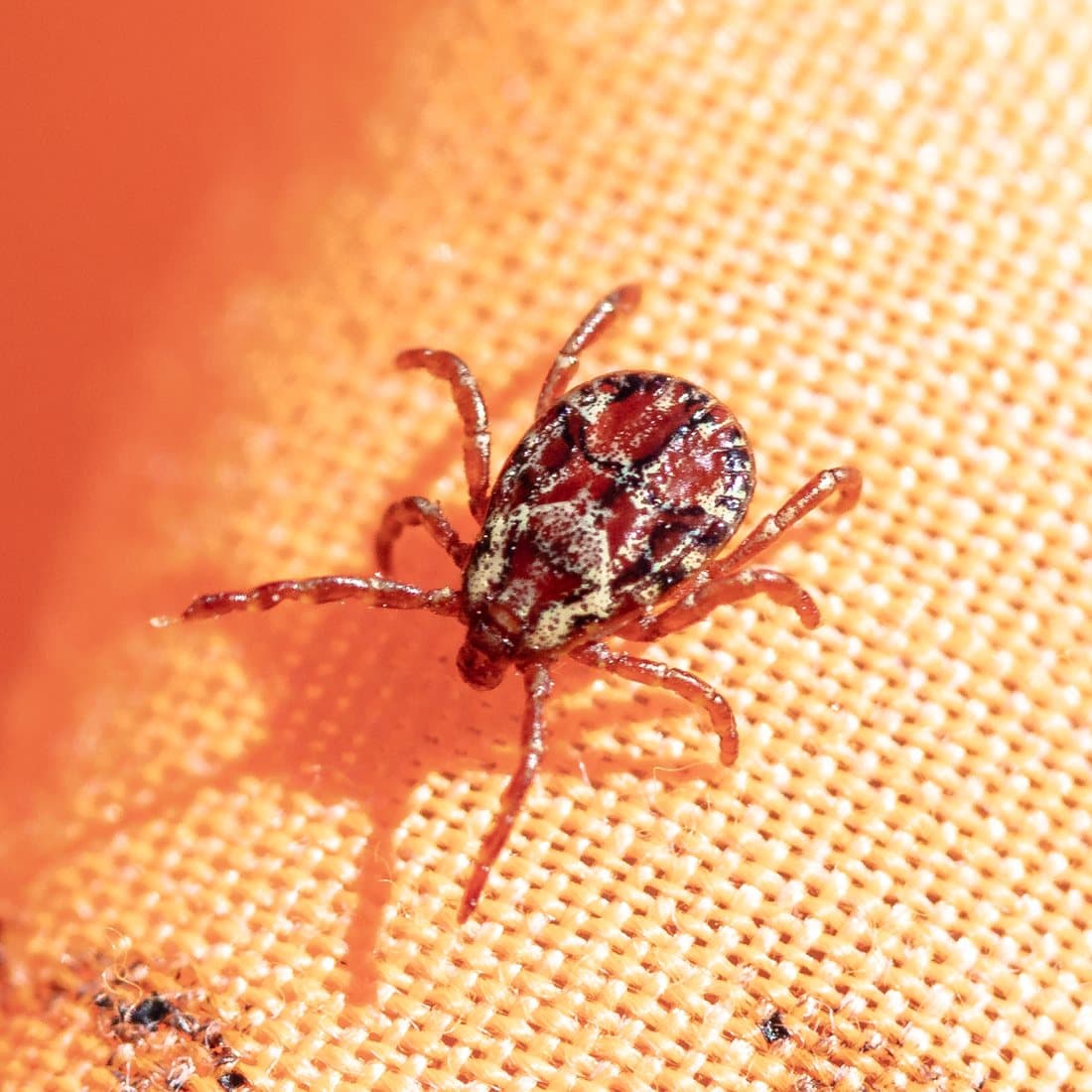
Female Asian longhorned tick, small and uniform reddish-brown with no markings

Asian longhorned tick

Haemaphysalis longicornis

A newer arrival, established in the mid-Atlantic and spreading north
Size:
Small and plain, often found in large numbers
Look for:
Reddish-brown with no markings
Carries:
Mainly a livestock threat; human disease risk under study
Full asian longhorned tick guide →

Photo credits in each guide. Disease and range data: CDC tick surveillance (ArboNET Tick Module), 2025.

How to identify a tick in three steps

1. Size

How big is it?

A poppy seed is a nymph. A sesame seed is an adult deer tick. Noticeably bigger, an apple seed, points to a dog tick. A tick swollen with blood is engorged and harder to ID by size.

2. Color and markings

Any pattern?

A solid dark shield with no pattern is a deer tick. An ornate off-white mottled shield is a dog tick. A single white dot in the center of the back is a female lone star tick.

3. Legs

What color are the legs?

Black legs point to the deer tick (the blacklegged tick). Brown legs point to the dog tick or lone star tick. Combined with size and markings, this usually settles it.

Nymph vs. adult: why size matters

Ticks bite at two life stages. Nymphs are immature and tiny, about a poppy seed, and they cause most Lyme disease cases precisely because they are so easy to miss. Adults are larger, about a sesame seed or bigger. Both can transmit disease, so a tick check should look for the small ones too, especially in early summer when nymph deer ticks peak.

Know which ticks are active where you live

TickZone gives every town a daily 0–100 tick-risk score and lists the species established in your county.

Check your town →

Frequently asked questions

How do you identify a tick?
Look at three things: size, color, and markings. A deer tick is small with a reddish-orange body, a solid dark shield, and black legs. An American dog tick is larger and brown with an ornate off-white mottled shield. A lone star tick is reddish-brown, and the female has a single white dot on her back. Only the deer tick carries Lyme disease.
Which tick carries Lyme disease?
The deer tick, also called the blacklegged tick (Ixodes scapularis), is the tick that spreads Lyme disease. The American dog tick and the lone star tick do not carry Lyme, though they can transmit other illnesses.
What is the difference between a nymph and an adult tick?
Nymphs are immature ticks about the size of a poppy seed, while adults are roughly a sesame seed or larger. Nymph deer ticks cause most Lyme cases because they are so small they are easy to miss. Both nymphs and adults can bite and transmit disease.
Can you identify a tick from a photo?
Often, yes, from size, color, leg color, and markings like the lone star tick's white dot. Use the identification chart above to compare. If you are unsure or feel unwell after a bite, save the tick in a sealed bag and contact a healthcare professional or your county health department.