Alpha-Gal Foods to Avoid
Alpha-gal syndrome is a delayed allergy to a sugar found in mammals, so the diet is simpler than it first looks: avoid mammal meat and mammal-derived ingredients, and keep poultry, seafood, eggs, and plants. The hard part is the hidden sources. Here is the full list, what stays safe, and how to read a label. For how the allergy starts, see what alpha-gal syndrome is.
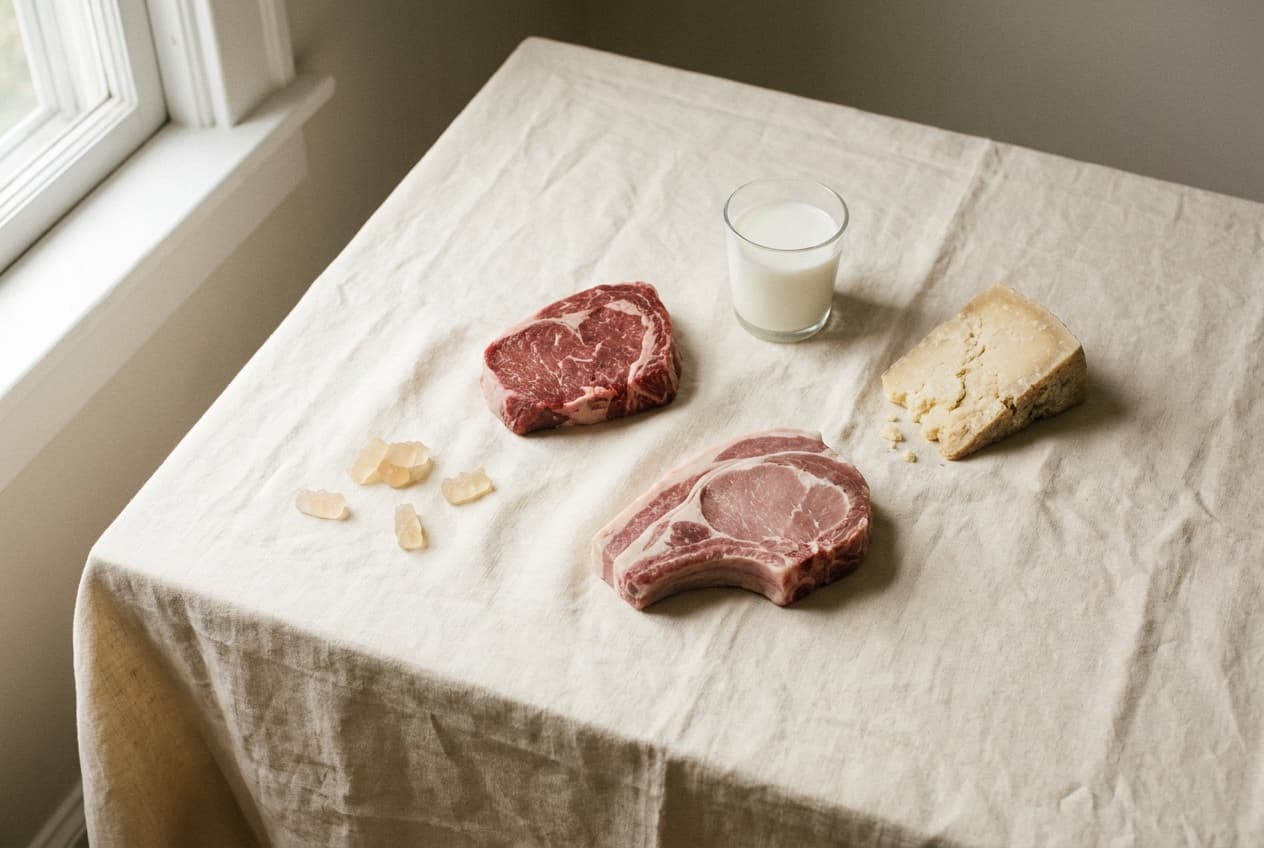
The list: avoid vs. safe
Alpha-gal is in mammals and mammal-derived products. Everything else is off the table only if it hides a mammal ingredient.
Avoid
- Red meat
- Beef, pork, lamb, goat, venison, bison, rabbit, and other mammal meat.
- Organ meats
- Liver, kidney, and other offal tend to be higher in alpha-gal than muscle meat.
- Dairy
- Milk, cheese, butter, cream, yogurt, ice cream, and whey. Many people tolerate dairy, but some do not.
- Gelatin
- Gummy candy, marshmallows, gelatin desserts, and gel capsules. Gelatin is rendered from mammal collagen.
- Broths and fats
- Beef or pork broth, bone broth, lard, tallow, suet, and gravies made from mammal drippings.
- Hidden mammal ingredients
- Rennet in cheese, carmine and some natural flavors, mono- and diglycerides, and glycerin from animal sources.
Generally safe
- Poultry
- Chicken, turkey, duck. Birds do not carry alpha-gal.
- Seafood
- Fish and shellfish of all kinds are alpha-gal free.
- Eggs
- Eggs are safe for most people with AGS.
- Plant foods
- Fruit, vegetables, grains, beans, nuts, and seeds.
- Plant carrageenan
- Carrageenan comes from seaweed, not mammals, and is safe despite the confusing name.
Tolerance differs from person to person, especially for dairy and gelatin. An allergist can help you set a diet that is safe for you. Not medical advice.
The hidden sources that catch people out
Most accidental reactions do not come from an obvious steak. They come from these.
Medications and supplements
Gelatin capsules, magnesium stearate, glycerin, and some vaccine or drug excipients are mammal-derived. Never stop a prescribed medicine on your own. Ask your pharmacist or clinician about alpha-gal-safe alternatives.
Personal-care products
Tallow, lanolin, glycerin, and collagen show up in soaps, lotions, and cosmetics. Contact reactions are uncommon, but people with severe AGS sometimes react.
Cross-contact when cooking
Shared grills, fryers, and pans that touched beef or pork can carry enough residue to trigger sensitive people. Use clean surfaces and separate utensils.
Restaurant surprises
Fries cooked in beef tallow, beans cooked with pork, broth bases, and butter finishes are frequent hidden sources. Ask how a dish is prepared.
Reading a label
Scan for the mammal-derived words: gelatin, beef or pork fat, tallow, lard, suet, whey, casein, lactose, rennet, carmine, and glycerin or mono- and diglycerides of unspecified origin. When a source is not stated, contact the manufacturer. Do not worry about carrageenan; it comes from seaweed.
Eating out
Ask whether fries are cooked in beef tallow, whether beans or greens are cooked with pork, and whether a sauce is finished with butter or beef stock. Request a clean pan or grill area. Carrying an allergist-issued plan and emergency epinephrine is worth discussing if your reactions have been severe.
Frequently asked questions
- What foods should you avoid with alpha-gal syndrome?
- Avoid mammal meat (beef, pork, lamb, goat, venison), organ meats, and mammal-derived products such as gelatin, lard, tallow, and broths. Many people also need to limit dairy. Poultry, fish, shellfish, eggs, and plant foods do not contain alpha-gal and are generally safe.
- Can you eat dairy with alpha-gal syndrome?
- It depends on the person. Dairy contains alpha-gal, so some people react to milk, cheese, and butter, while others tolerate them without a problem. Sensitivity can also change over time. Work with an allergist to test your own tolerance rather than guessing.
- Is chicken safe with alpha-gal?
- Yes. Chicken, turkey, and other poultry do not contain alpha-gal, and neither do fish, shellfish, or eggs. Alpha-gal is a sugar found only in mammals, so non-mammal protein is the foundation of an alpha-gal diet.
- Do you have to avoid gelatin with alpha-gal?
- Often yes. Gelatin is made from mammal collagen and is a common hidden source in gummy candy, marshmallows, gelatin desserts, and capsule coatings. Sensitivity varies, and gelatin given intravenously can be a stronger trigger than gelatin eaten in food.