The Lone Star Tick
Amblyomma americanum
The lone star tick (Amblyomma americanum) is the most aggressive human-biting tick moving into the Northeast. It is established in coastal southern New England and spreading north, and it is the tick behind alpha-gal syndrome, the tick-bite allergy to red meat.
- Carries Lyme
- No
- Key ID
- White dot (female)
- Peak season
- Spring–Fall
- Known for
- Alpha-gal syndrome
- Where
- Coastal, spreading north
Quick facts
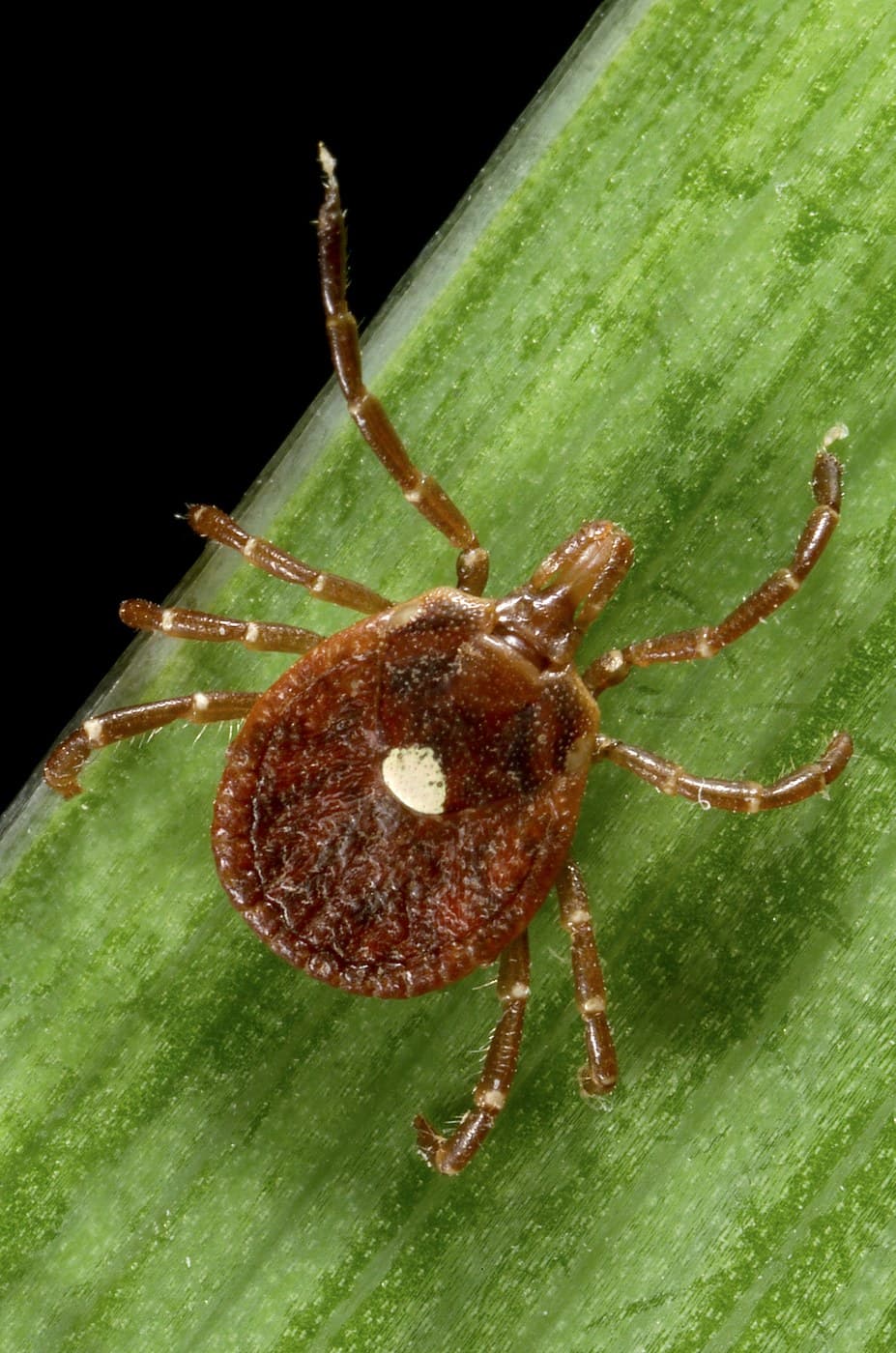
Male vs. female
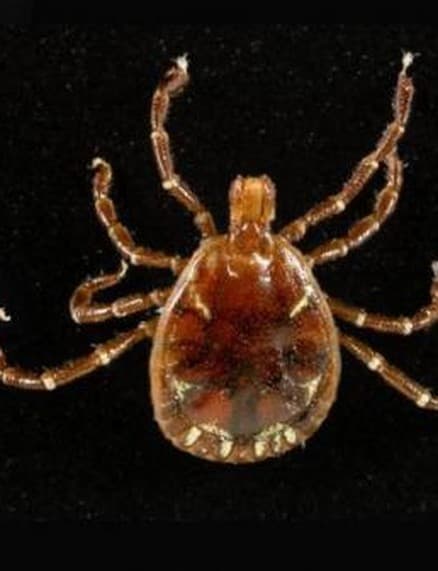
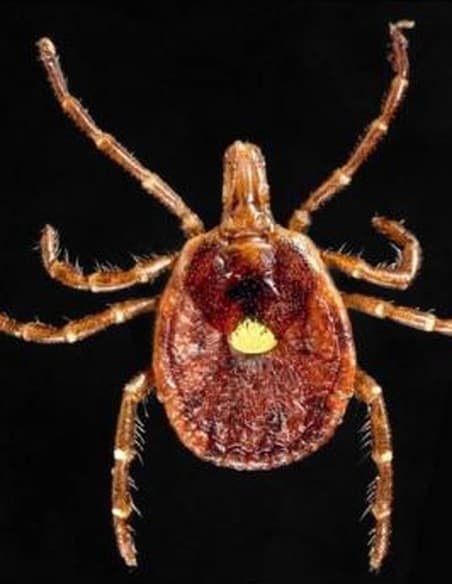
The single white star belongs to the female only. The male is browner, with faint white streaks or spots scattered around the edge of his back and no central dot. Both are round, fast, and quick to climb toward a host.
Diseases it can carry
Alpha-gal syndrome
A delayed allergy to red meat triggered by the lone star tick's bite. It is the reason this tick draws so much attention as it spreads north, and it is now a reportable condition in some Northeast states.
Ehrlichiosis
A bacterial infection causing fever, headache, muscle aches, and fatigue, treated with doxycycline. It is the most common serious infection this tick transmits.
STARI
Southern tick-associated rash illness, a Lyme-like circular rash at the bite without the Lyme bacteria. Its cause is still being studied; it is generally milder than Lyme.
It does not transmit Lyme disease, that is the deer tick. It can also carry tularemia and, rarely, Heartland and Bourbon viruses.
How to identify it
- The female has a single silvery-white dot in the center of a reddish-brown back.
- Larvae, called seed ticks, are tiny and can attach by the dozens or hundreds in late summer.
- It hunts: unlike the deer tick, which waits on vegetation, it actively pursues hosts.
When and where
Active from spring into fall, peaking in late spring and summer. All three life stages bite people, and larval seed ticks can emerge in swarms from July through September, a later-season pattern than the deer tick.
Range in the Northeast
The lone star tick is established in coastal southern New England, including Cape Cod and the Islands, and its range is moving north. It was first documented on Cape Cod in 2015.
See which counties in each state it is established in, or check your town's daily tick risk.
Alpha-gal syndrome: a red-meat allergy from a tick bite
The lone star tick's bite can trigger a delayed allergy to red meat. See how it works and where the risk is highest.
Frequently asked questions
- Where is the lone star tick found in the Northeast?
- It is established with breeding populations in coastal southern New England, including Cape Cod and the Islands, and it has been reported and is expanding up the coast and inland. It was first documented on Cape Cod in 2015 and its range is moving north.
- Does the lone star tick cause Lyme disease?
- No. Lyme disease is spread by the blacklegged (deer) tick, not the lone star tick. The lone star tick carries different illnesses, including ehrlichiosis, STARI, tularemia, and alpha-gal syndrome, a delayed allergy to red meat.
- What does a lone star tick look like?
- Adult females have a single silvery-white dot in the center of a reddish-brown back, which gives the tick its name. Males have scattered white streaks around the edge. Larvae, sometimes called seed ticks, are tiny and can attach in clusters in late summer.
- When are lone star ticks most active?
- From spring into fall, peaking in late spring and summer. All three life stages bite people, and larval seed ticks can emerge in swarms from July through September, a later-season pattern than the deer tick.