Deer Tick vs. Dog Tick: How to Tell Them Apart
These two ticks look similar at a glance but are genuinely different, and one thing matters most: the deer tick spreads Lyme disease and the American dog tick does not. Here they are side by side, with the size, color, and markings that tell them apart.
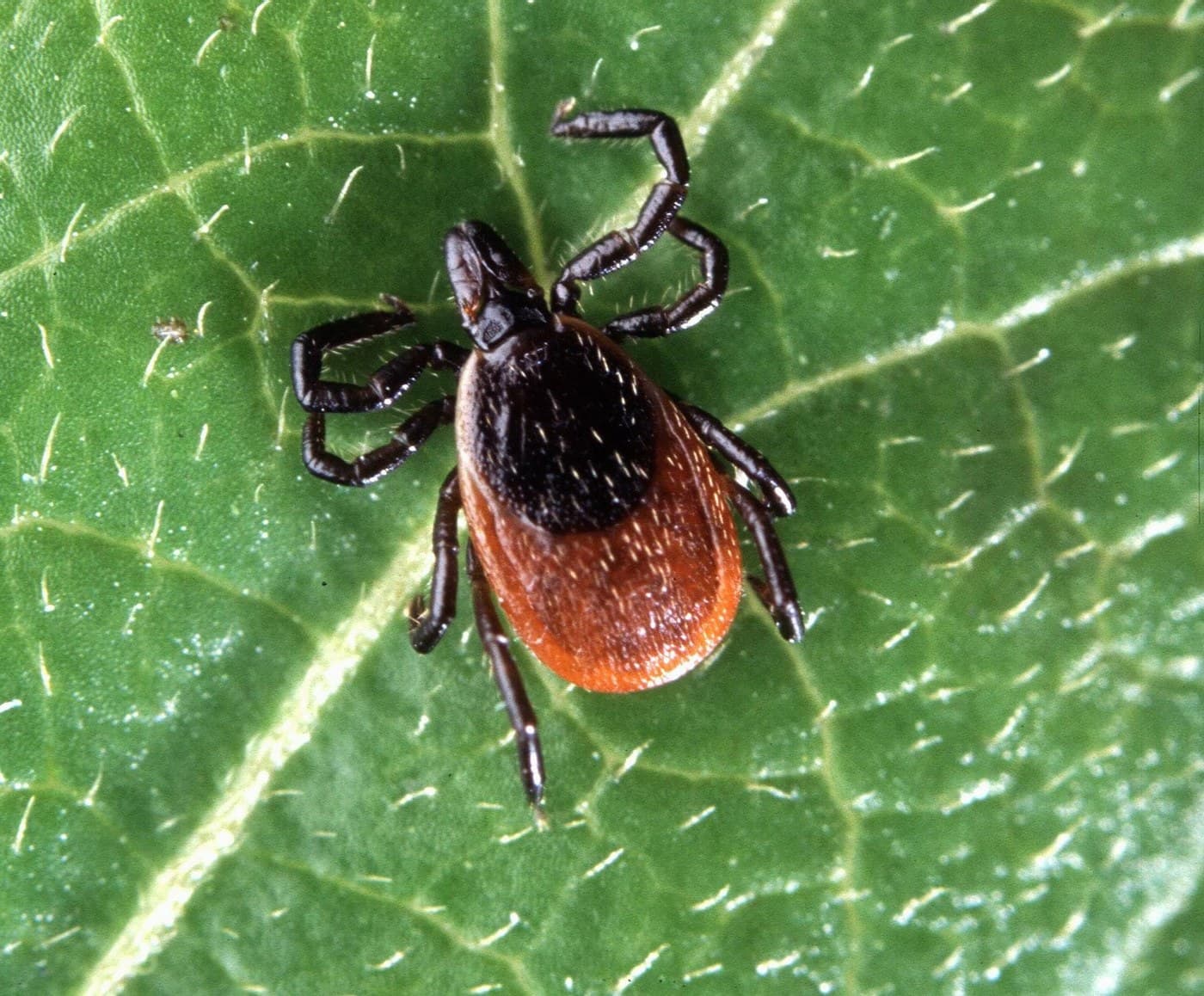
Deer tick (Ixodes scapularis), the blacklegged tick. Small, reddish-orange body, a solid dark shield, black legs, and no pattern. The Lyme carrier.
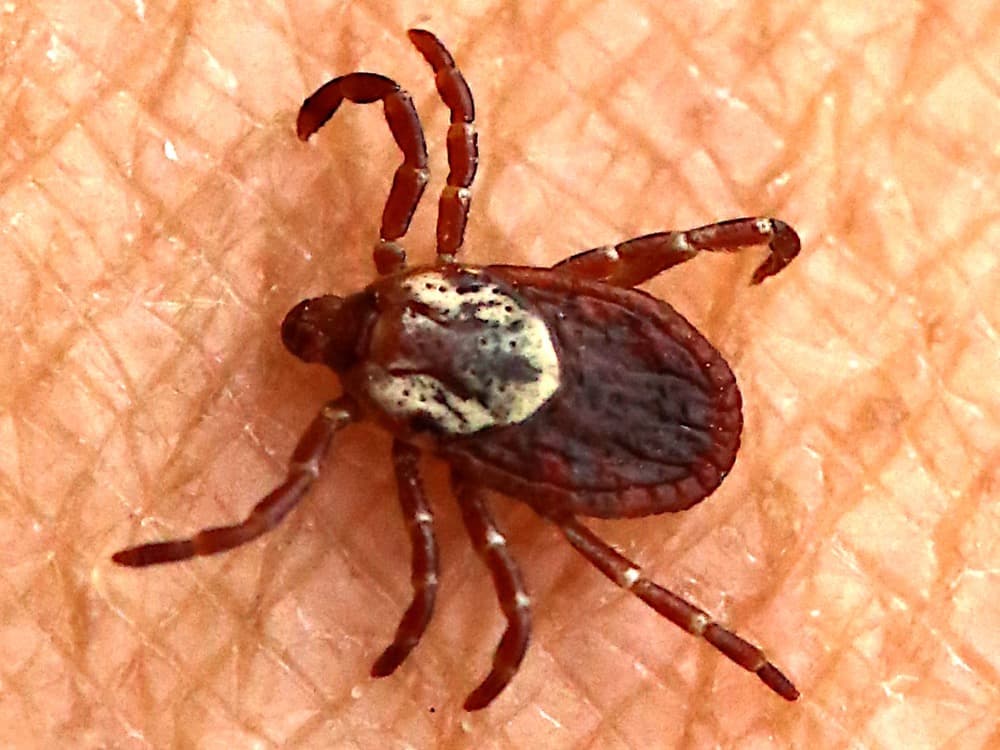
American dog tick (Dermacentor variabilis), the wood tick. Larger, brown, with an ornate off-white mottled shield behind the head. Not a Lyme carrier.
Deer tick vs. dog tick, at a glance
| Deer tick (blacklegged) | American dog tick (wood tick) | |
|---|---|---|
| Spreads Lyme disease | Yes, the main Lyme carrier | No, does not carry Lyme |
| Scientific name | Ixodes scapularis | Dermacentor variabilis |
| Also called | Blacklegged tick | Wood tick |
| Adult size | Small, about a sesame seed | Larger, about an apple seed |
| Color / markings | Reddish-orange body, solid dark shield, no pattern | Brown with an ornate off-white mottled shield |
| Legs | Black legs | Brown legs |
| Diseases carried | Lyme, babesiosis, anaplasmosis, Powassan | Rocky Mountain spotted fever, tularemia (both rare) |
| Peak season | Nymphs Jun–Jul; adults again in fall | Adults May–Jul |
| Where it bites | Wooded and brushy edges, leaf litter | Grassy, open areas, trails, yards |
Which one bit me?
A quick decision cue. When in doubt, save the tick in a sealed bag and, if you feel unwell, contact a healthcare professional. This is general information, not medical advice.
Likely a deer tick if…
- It is small, around a sesame seed or smaller.
- The body is reddish-orange with a solid dark shield.
- The legs are black and there is no pattern on the back.
- You were in woods, brush, or leaf litter.
This is the Lyme-risk tick. Remove it promptly.
Likely a dog tick if…
- It is larger, around an apple seed.
- It is brown with an ornate off-white mottled shield.
- You were in a grassy, open area, a trail edge, or a yard.
Not a Lyme carrier, but still remove it promptly.
Deer tick vs. wood tick, is that the same thing?
Yes. “Wood tick” is just another name for the American dog tick (Dermacentor variabilis) across much of the eastern United States. So a search for “deer tick vs. wood tick” is the same comparison as this page: the deer tick is the small, black-legged Lyme carrier, and the wood tick is the larger, patterned brown tick that does not carry Lyme.
See which ticks are active in your town today
TickZone gives every town a daily 0–100 tick-risk score and lists which tick species live in your county.
Frequently asked questions
- What is the main difference between a deer tick and a dog tick?
- The deer tick (blacklegged tick) spreads Lyme disease; the American dog tick does not. Visually, the deer tick is smaller with a reddish-orange body, a solid dark shield, and black legs and no pattern, while the American dog tick is larger and brown with an ornate off-white mottled shield behind its head.
- Is a wood tick the same as a dog tick?
- Yes. “Wood tick” is a common name for the American dog tick (Dermacentor variabilis) in the eastern United States. It is not a Lyme carrier. So “deer tick vs. wood tick” is the same comparison as deer tick vs. dog tick.
- Which tick carries Lyme disease?
- The deer tick, also called the blacklegged tick, is the tick that spreads Lyme disease in the Northeast and Midwest. The American dog tick does not carry Lyme. This is the single most important reason to tell the two apart.
- How can I tell which tick bit me?
- Look at size, color, and legs. A small tick with a reddish-orange body, a solid dark shield, and black legs is most likely a deer tick (a Lyme risk). A larger brown tick with an ornate off-white mottled back is most likely an American dog tick. If you are unsure or feel unwell after a bite, save the tick and contact a healthcare professional.
- Are deer ticks smaller than dog ticks?
- Yes. An adult deer tick is roughly the size of a sesame seed, while an adult American dog tick is noticeably larger, about the size of an apple seed. Deer tick nymphs are smaller still, about a poppy seed, which is why they cause most Lyme cases: they are easy to miss.