The Deer Tick
Ixodes scapularis · also called the blacklegged tick
The deer tick (Ixodes scapularis), also called the blacklegged tick, is the most important human-biting tick in the Northeast. It is found region-wide and is the carrier of Lyme disease, along with babesiosis, anaplasmosis, and Powassan virus.
It is the tick behind most Lyme confusion; only the deer tick carries Lyme.
- Carries Lyme
- Yes
- Also called
- Blacklegged tick
- Peak season
- June–July (nymphs)
- Adult size
- About a sesame seed
- Where
- Region-wide, wooded edges
Quick facts
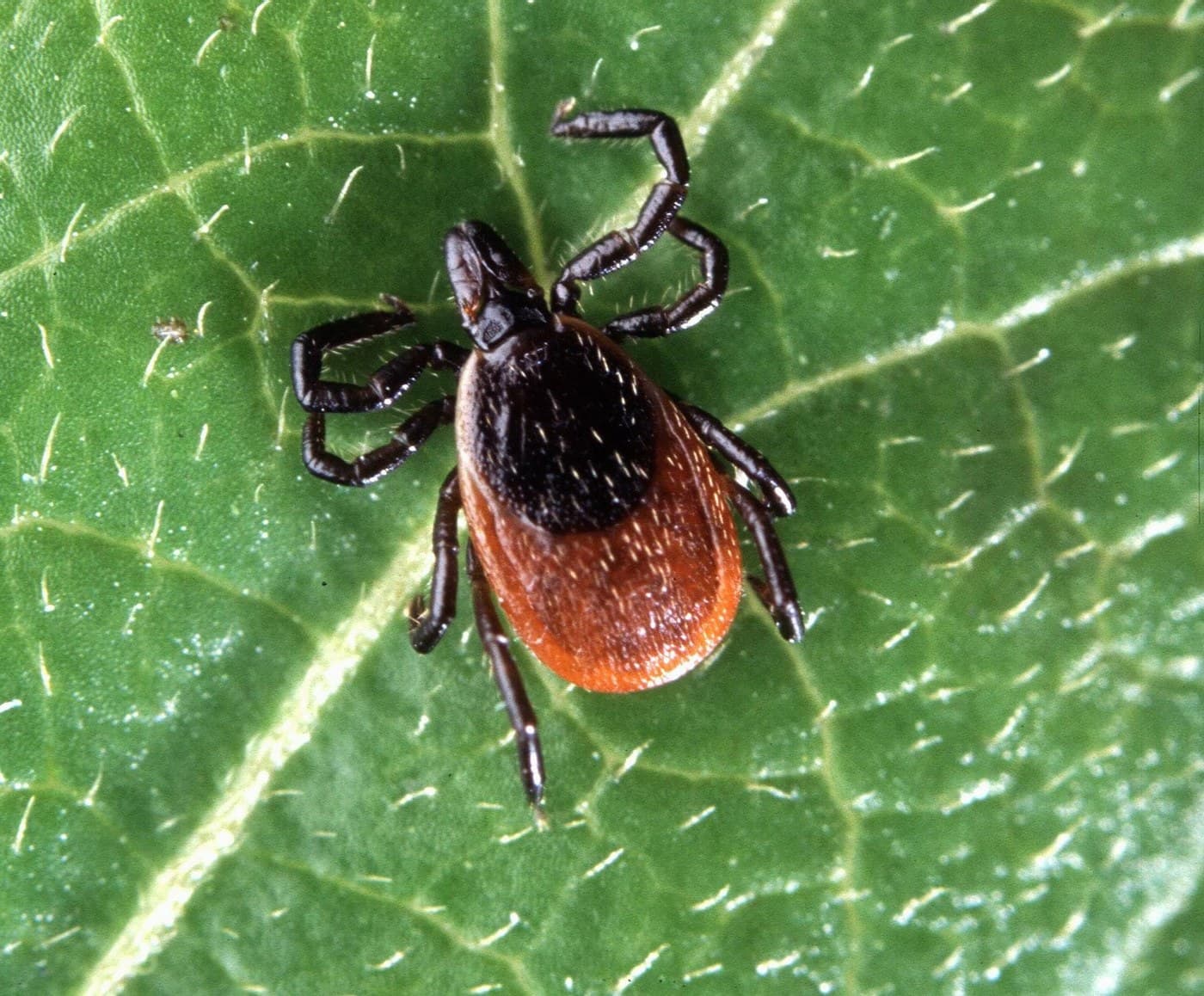
Male vs. female
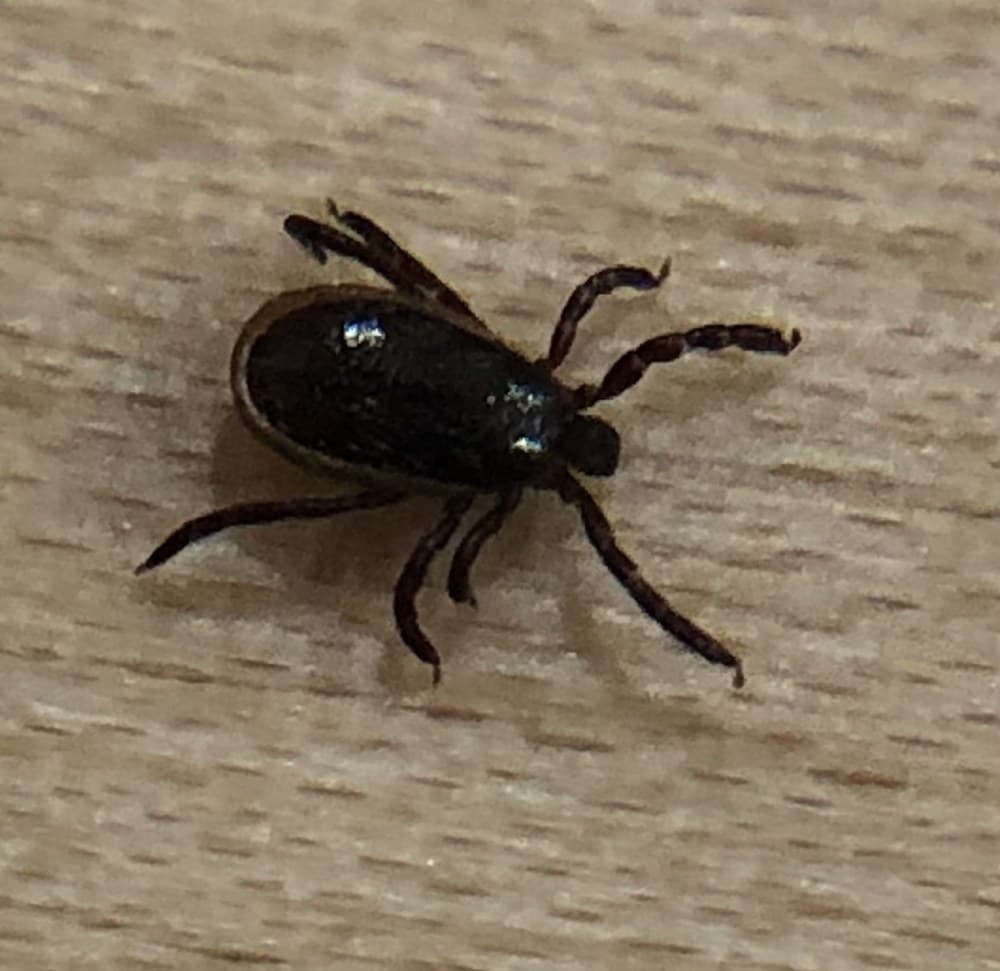
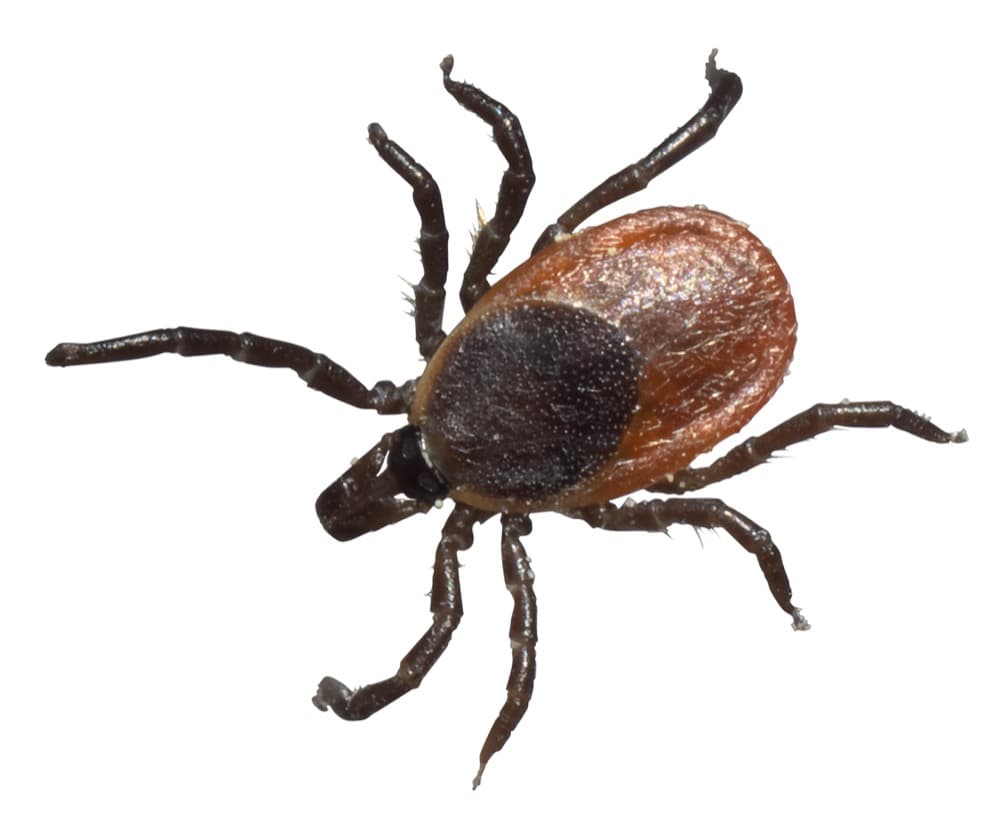
The female has a reddish-orange abdomen behind a small black shield, and she is the one that swells and transmits disease. The male is smaller and solid dark brown to black all over, and he rarely bites or feeds. Nymphs of both sexes are the tiny poppy-seed stage behind most Lyme cases.
Diseases it can carry
Lyme disease
The most common tick-borne illness in the Northeast. An expanding bullseye rash, fever, fatigue, and joint aches are typical; caught early it is usually treated successfully with antibiotics. The Northeast has among the highest Lyme rates in the country.
Babesiosis
A malaria-like parasite that infects red blood cells, causing fever, chills, and fatigue. It can be serious for older adults and people without a spleen or with weak immune systems. It is notably common in southern New England, the Cape, and the Islands.
Anaplasmosis
A bacterial infection bringing fever, headache, chills, and muscle aches, treated with doxycycline. It has risen sharply across the Northeast, especially in western New England.
Powassan virus
Rare but serious: it can cause brain swelling (encephalitis) and has no specific treatment. Unlike Lyme, it can transmit within hours of a bite. Still uncommon, but an emerging concern in the Northeast.
How to identify it
- Reddish-brown with a solid dark shield, black legs, and no white markings.
- Adults are about a sesame seed; nymphs are a poppy seed and cause most Lyme.
- No white dot, which separates it from the lone star tick.
When and where
Nymphs peak in June and July; adults have a fall peak and quest on any day above freezing. They wait in leaf litter and shaded wood edges, not open lawns. Risk is lowest in deep winter but never quite zero.
Range in the Northeast
The deer tick is established across all of the Northeast, from the coast to the interior. Local risk still varies a lot by habitat and county.
See which counties in each state it is established in, or check your town's daily tick risk.
Frequently asked questions
- What diseases does the deer tick carry?
- In the Northeast the deer tick (blacklegged tick) can transmit Lyme disease, babesiosis, anaplasmosis, and Powassan virus. Lyme is by far the most common. It does not cause alpha-gal syndrome, which is linked to the lone star tick.
- When are deer ticks most dangerous?
- Nymphs peak in June and July and cause most Lyme cases: they are the size of a poppy seed and easy to miss. Adults have a second peak in the fall and can bite on any day above freezing.
- What does a deer tick look like?
- Adults are reddish-brown with a solid dark shield (scutum), black legs, and no white markings, roughly the size of a sesame seed. Nymphs are much smaller, about a poppy seed. They have no white dot, which distinguishes them from the lone star tick.
- How fast can a deer tick transmit disease?
- Lyme transmission usually needs the tick attached for a day or more, so prompt removal helps a lot. Powassan virus, though rare, can transmit within hours, which is why any attached tick should be removed quickly.