The American Dog Tick
Dermacentor variabilis · also called the wood tick
The American dog tick (Dermacentor variabilis), or wood tick, is common in grassy areas across the Northeast and is the tick people most often find on a dog, or on themselves, in summer. Reassuringly, it does not carry Lyme disease or alpha-gal.
- Carries Lyme
- No
- Also called
- Wood tick
- Peak season
- May–July
- Adult size
- About an apple seed
- Where
- Grassy, open areas
Quick facts
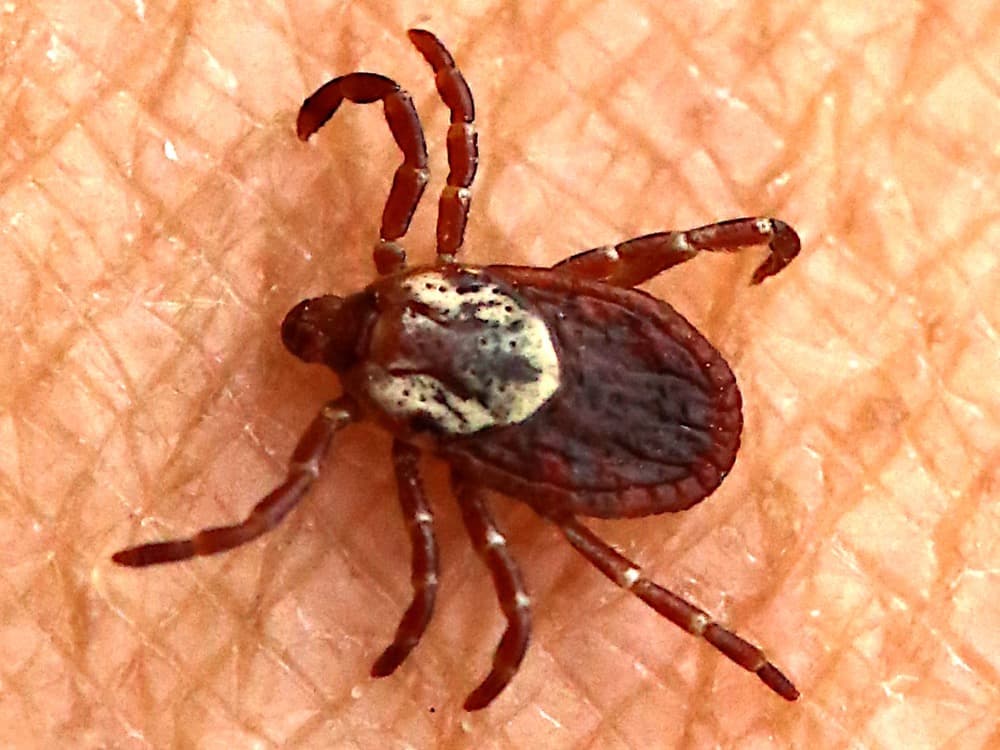
Male vs. female
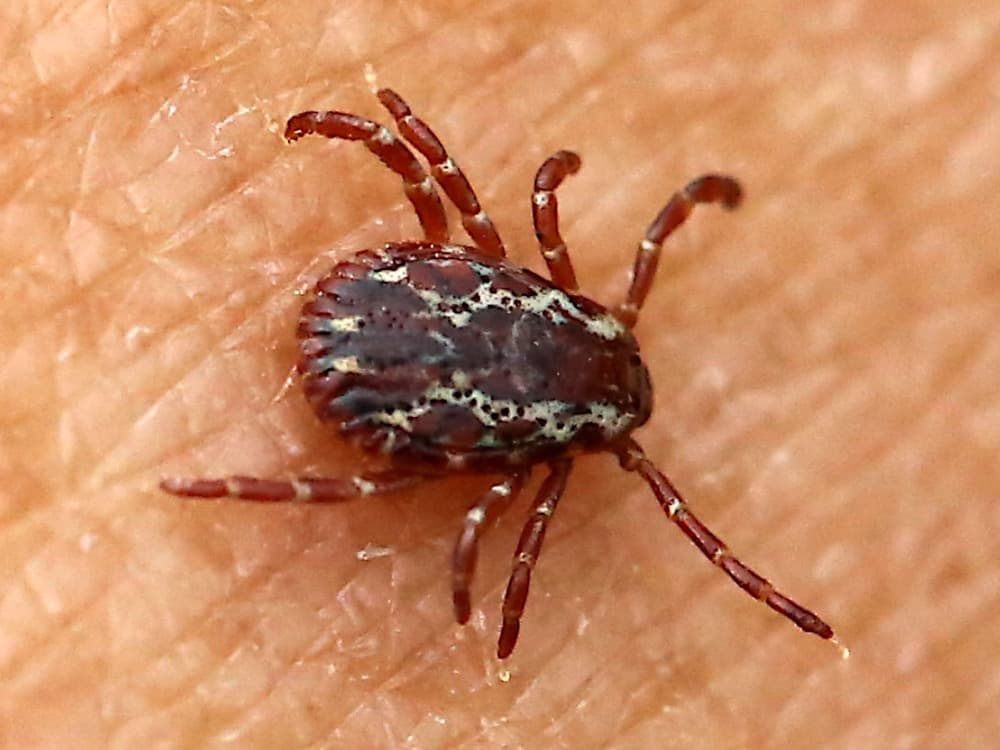
The female has a large off-white shield just behind her head, and the rest of her darkens and swells to a slate-gray bean when engorged. The male is a touch smaller, with fine white and gray marbling spread across his whole back, and he never balloons up the way the female does.
Diseases it can carry
Rocky Mountain spotted fever
A bacterial infection (Rickettsia rickettsii) causing fever, headache, and a rash that often begins on the wrists and ankles. It is rare in the Northeast but can be life-threatening if untreated, so early doxycycline matters. Despite the name, most US cases are in the Southeast.
Tularemia
A bacterial infection (Francisella tularensis), sometimes called rabbit fever, that can also spread other ways. In the Northeast it is best known for outbreaks on Martha's Vineyard. It is uncommon and treatable with antibiotics.
It does not transmit Lyme disease, babesiosis, anaplasmosis, or alpha-gal syndrome.
How to identify it
- Noticeably bigger than a deer tick, brown with ornate whitish markings on the shield.
- What most people find crawling on themselves or their dog after a field walk.
- No single white dot, which separates it from the lone star tick.
When and where
Adults are out from spring through summer, peaking roughly May through July, in tall grass, meadows, and sunny trail edges. Only the adults commonly bite people; younger stages feed on small mammals like mice.
Range in the Northeast
The American dog tick is found throughout the Northeast in grassy, open habitat, different ground than the deer tick's shaded woods, which is why the two are worth tracking separately.
See which counties in each state it is established in, or check your town's daily tick risk.
Frequently asked questions
- Does the American dog tick cause Lyme disease?
- No. The dog tick does not transmit Lyme disease, babesiosis, anaplasmosis, or alpha-gal syndrome. It can carry Rocky Mountain spotted fever and tularemia, both uncommon in the Northeast. Lyme is spread by the deer tick.
- How do I tell a dog tick from a deer tick?
- The American dog tick is larger and has an ornate mottled white or cream pattern on its back, while the deer tick is smaller with a plain dark shield and no markings. The lone star tick has a single white dot. Only the deer tick carries Lyme.
- Where do you find American dog ticks?
- In grassy and brushy areas, along trails, roadsides, and in yards, across the Northeast. They are the tick people most often find crawling on a dog or on themselves in late spring and summer.
- When are American dog ticks active?
- Adults are active from spring through summer, peaking roughly May through July. Only the adults commonly bite people; the younger stages feed mostly on small mammals.