Seed Ticks: What They Are and How to Get Rid of Them
Found a cluster of tiny specks on your leg or your dog and wondered if they are ticks? They probably are. Seed ticks are the larval, just-hatched stage of a tick, they have six legs instead of eight, and they turn up by the dozens. Here is how to identify them, tell them from chiggers, and get rid of them.
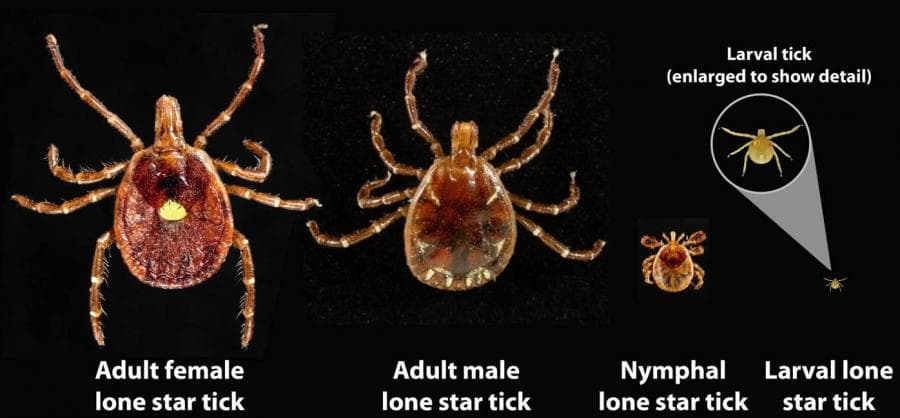
What is a seed tick?
The larval stage
A tick's life goes egg, larva, nymph, adult. The larva is the seed tick: freshly hatched and looking for its first meal.
Six legs, not eight
The quickest tell: larval seed ticks have six legs. Nymphs and adult ticks have eight. Under a magnifier that settles it.
They come in crowds
A female tick lays thousands of eggs, so seed ticks hatch and cluster together. Brushing the wrong leaf can leave dozens on you at once.
Seed ticks can belong to any tick species. In the Northeast, the ones people notice most are lone star tick larvae, which are famous for emerging in swarms in late summer.
Seed ticks vs. chiggers
The most common mix-up. The deciding clue: a seed tick stays attached, a chigger is already gone.
| Seed tick (larval tick) | Chigger (larval mite) | |
|---|---|---|
| What it is | The larval stage of a tick | The larval stage of a mite |
| Legs | Six legs (nymphs and adults have eight) | Six legs |
| Size | Poppy-seed size or smaller | Even smaller, nearly invisible |
| Does it attach? | Yes, it latches on and feeds for days | No, it bites, feeds briefly, then drops off |
| Where you find bites | Anywhere, often ankles and legs first | Skin folds, waistband, sock line, behind knees |
| Disease risk | Low from a single larval bite, but real as a group; depends on species | Does not spread disease; causes intense itch |
| How to remove | Fine tweezers or tape; shower and wash clothes hot | Shower and scrub; they are usually already gone |
How to get rid of seed ticks
On you
- Lift a cluster off with the sticky side of tape or a lint roller.
- Remove any that are attached with fine-tipped tweezers, close to the skin.
- Shower and scrub with a washcloth.
- Wash the clothes you wore in hot water and dry on high heat.
On your dog or cat
- Comb through with a fine flea-and-tick comb dipped in soapy water.
- Remove attached ones with tweezers or a tick tool.
- Bathe with a vet-recommended shampoo; ask your vet about prevention.
- Never use dog tick products on a cat.
See our full guides on removing a tick from a dog or a cat. This is general information, not medical or veterinary advice.
Frequently asked questions
- What are seed ticks?
- Seed ticks are the larval, just-hatched stage of a tick. They are tiny, about the size of a poppy seed or smaller, and have six legs instead of the eight that nymphs and adults have. Because a female tick lays thousands of eggs, seed ticks often turn up in clusters, and a walk through the wrong patch of grass can leave you with dozens at once.
- What is the difference between seed ticks and chiggers?
- Seed ticks are larval ticks; chiggers are larval mites. The biggest practical difference is that a seed tick latches on and feeds for days, so you find it still attached, while a chigger bites, feeds briefly, and drops off, leaving an intensely itchy welt but no attached bug. Chiggers do not spread disease; seed ticks can, depending on the species, though the risk from a single larval bite is low.
- Do seed ticks carry disease?
- Usually a single seed tick bite is low risk, because larval ticks have not fed yet and most hatch uninfected. They pick up pathogens from their first blood meal. The concern is more that they attach in large numbers and that some, like lone star larvae, cause itchy, irritating bites. Still, remove them promptly and watch the bite, since any attached tick is worth taking seriously.
- How do you get rid of seed ticks on humans?
- Remove any attached ones with fine-tipped tweezers, or lift a cluster off with the sticky side of tape or a lint roller. Then shower, scrub with a washcloth, and wash the clothes you were wearing in hot water and dry on high heat, which kills any that are still hiding in the fabric.
- When are seed ticks most common?
- Larval ticks are most active in late summer and early fall, roughly July through September. Lone star tick larvae are especially known for emerging in swarms during this window, which is why late-summer hikes in lone star country can end with dozens of tiny bites.