The Gulf Coast Tick
Amblyomma maculatum
A southern relative of the lone star tick that is pushing north into the mid-Atlantic. Its bite can transmit Rickettsia parkeri, a milder spotted fever that often leaves a dark scab at the bite.
- Carries Lyme
- No
- Carries
- R. parkeri spotted fever
- Peak season
- Warm months
- Range
- Spreading into mid-Atlantic
- Key ID
- Silvery shield markings
Quick facts
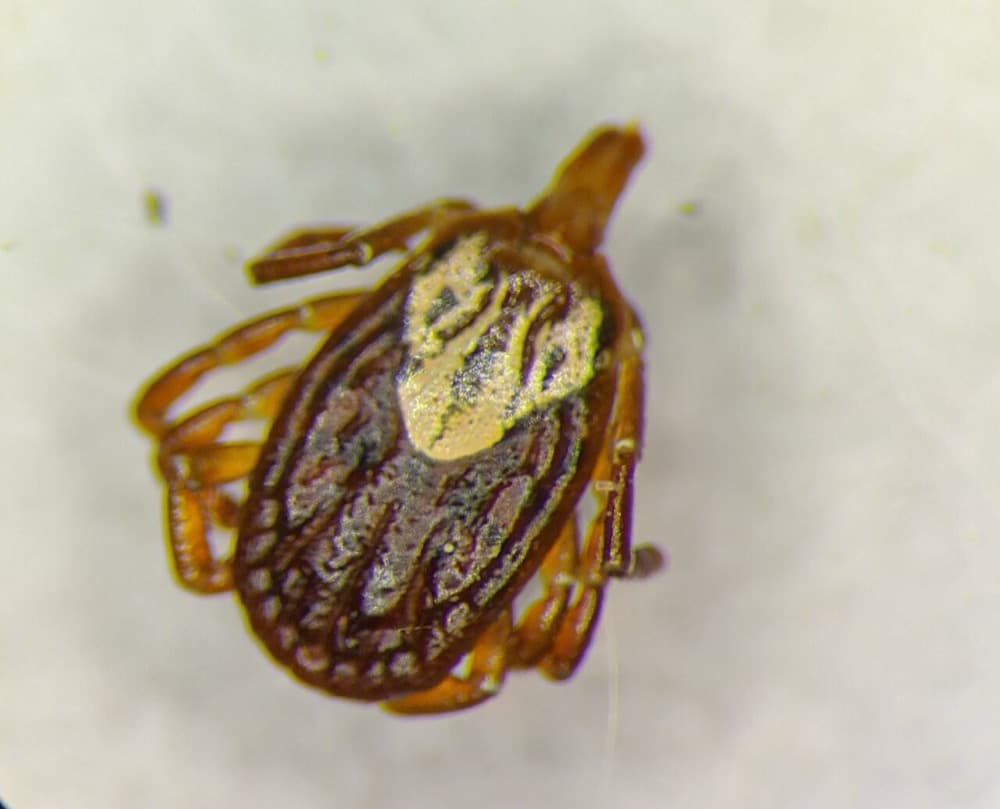
Male vs. female
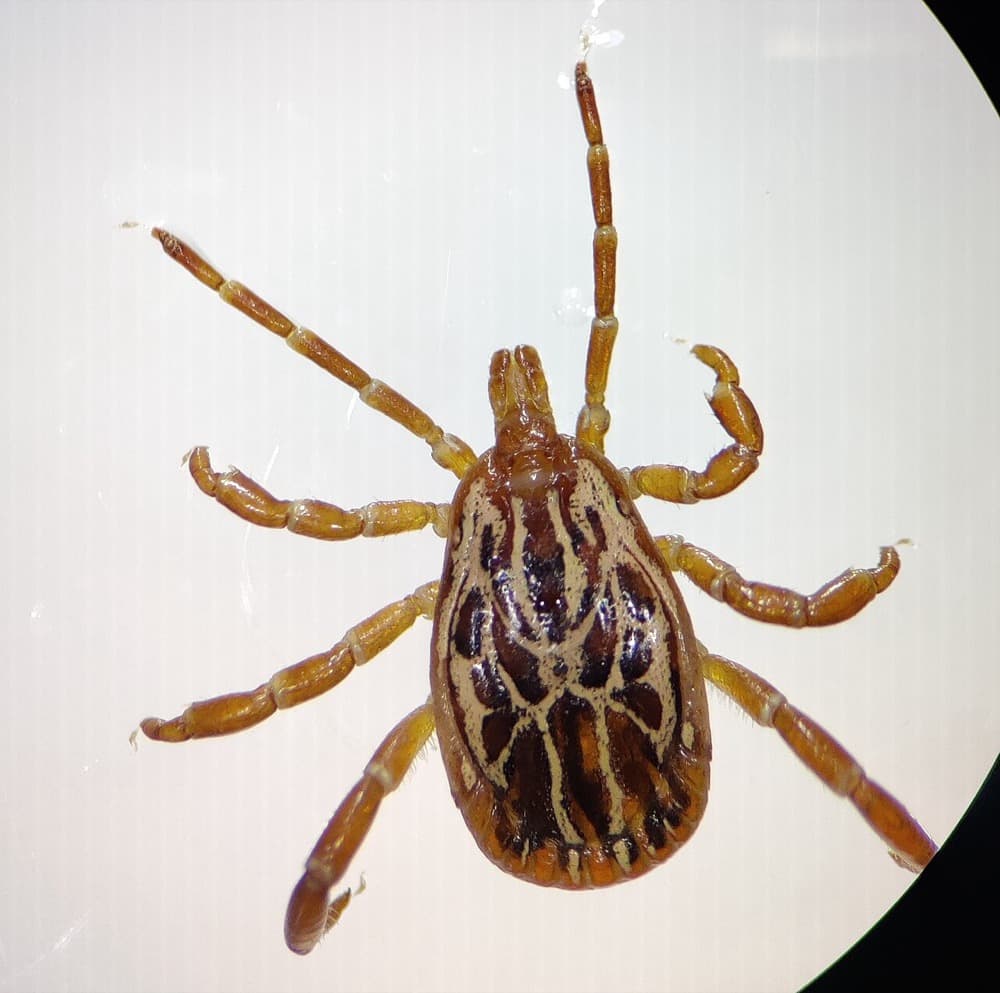
The female's shield is decorated with pale silvery streaks, and she swells behind it when feeding. The male wears the same ornate silver patterning spread across his whole back. Both run noticeably bigger than the common ticks people already know.
Diseases it can cause
Rickettsia parkeri rickettsiosis
A spotted fever milder than Rocky Mountain spotted fever. The tell is a dark scab (eschar) at the bite, often with fever, headache, and rash. It responds to doxycycline.
It does not carry Lyme disease.
How to identify it
- Similar to a lone star but larger, with silvery ornate markings on the shield instead of a single dot.
- Adults favor the ears and heads of deer, cattle, and dogs.
- Runs noticeably bigger than the deer tick or dog tick.
When and where
Adults are most active in the warm months in coastal grasslands and prairies, with established pockets now in parts of Virginia, Maryland, and Delaware. Its range keeps expanding northward.
Range in the Northeast
The Gulf Coast tick is a southern species with an expanding northern front now reaching the mid-Atlantic. It is not yet established across most of the Northeast, but its spread is being tracked, and it is worth recognizing as ranges shift.
Frequently asked questions
- Is the Gulf Coast tick in the Northeast?
- It is a southern tick whose range is expanding north, with established pockets now in parts of Virginia, Maryland, and Delaware. It is not yet widely established across the rest of the Northeast, but it is spreading and being monitored.
- What disease does the Gulf Coast tick carry?
- Its main concern is Rickettsia parkeri rickettsiosis, a spotted fever milder than Rocky Mountain spotted fever. It often leaves a dark scab at the bite site and is treated with doxycycline.
- How do I tell a Gulf Coast tick from a lone star tick?
- They are relatives and look similar, but the Gulf Coast tick is larger and has silvery ornate markings across its shield rather than the lone star female's single central white dot.
- Does the Gulf Coast tick carry Lyme disease?
- No. The Gulf Coast tick does not spread Lyme disease. Lyme is carried by the deer tick.