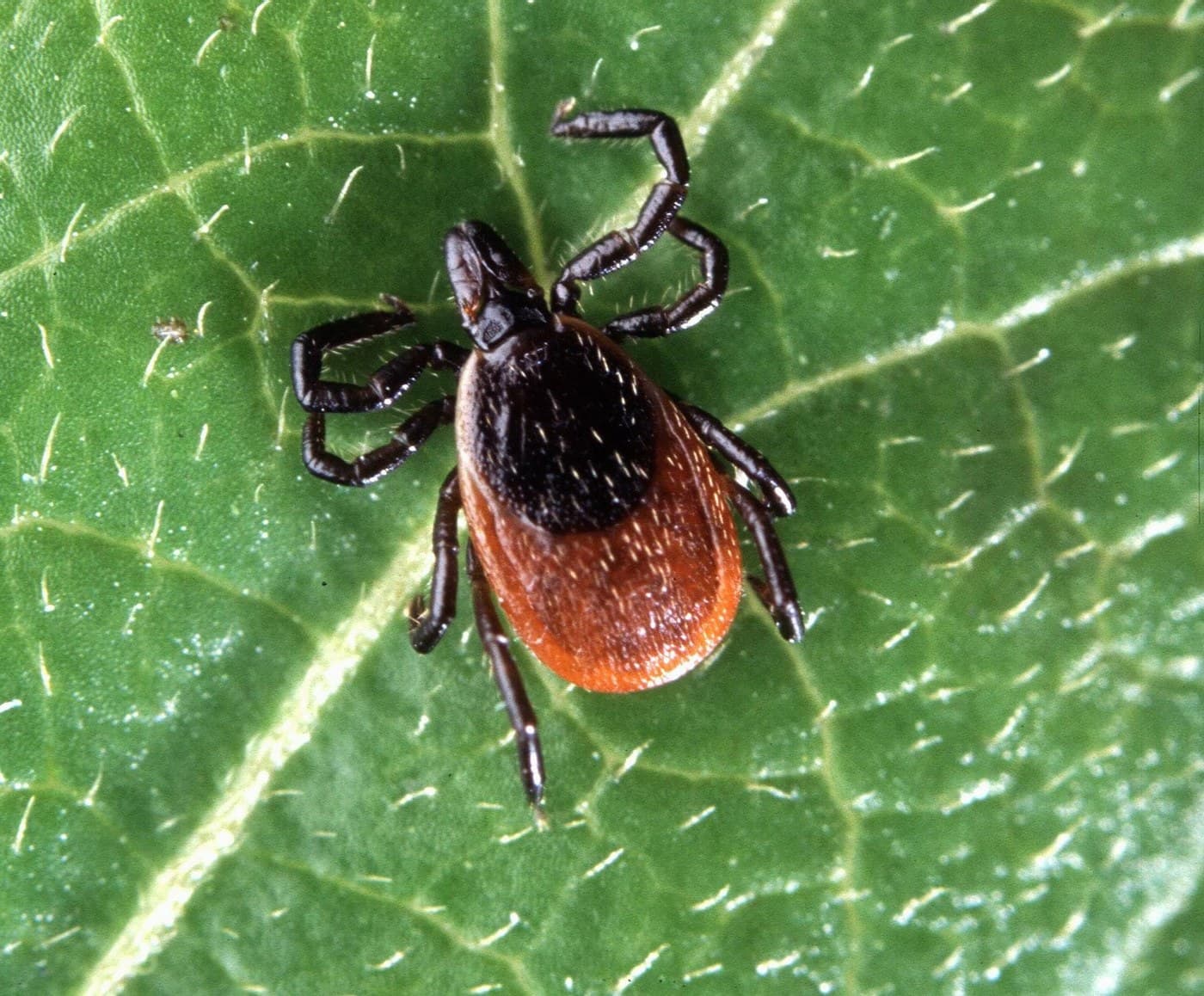
Deer tick
Ixodes scapularis
Established in Kansas
- Size:
- Small, a sesame seed (nymph: a poppy seed)
- Look for:
- Reddish-orange body, solid dark shield, black legs, no pattern
- Carries:
- Lyme, babesiosis, anaplasmosis, Powassan
Checked against CDC guidance, sources cited on this page. Last reviewed July 1, 2026. Who makes TickZone
The ticks you are most likely to find in Kansas, with photos and the size, color, and markings that tell them apart. Only the deer tick carries Lyme disease. Below the chart, see which types live in your county.
Ixodes scapularis
Established in Kansas
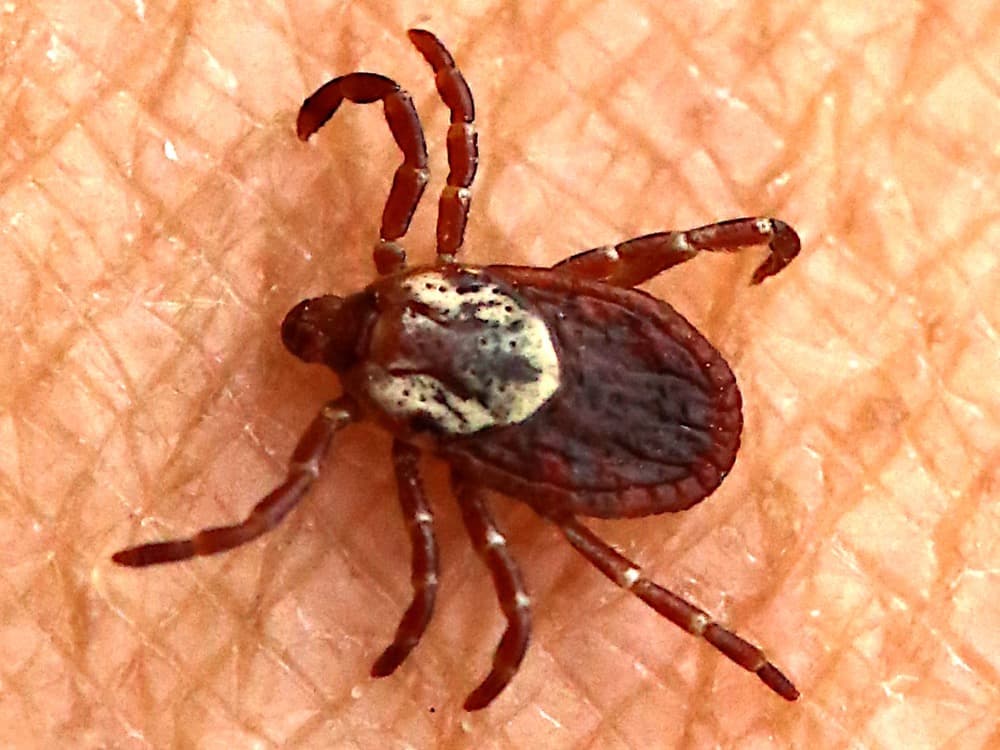
Dermacentor variabilis
Established in Kansas
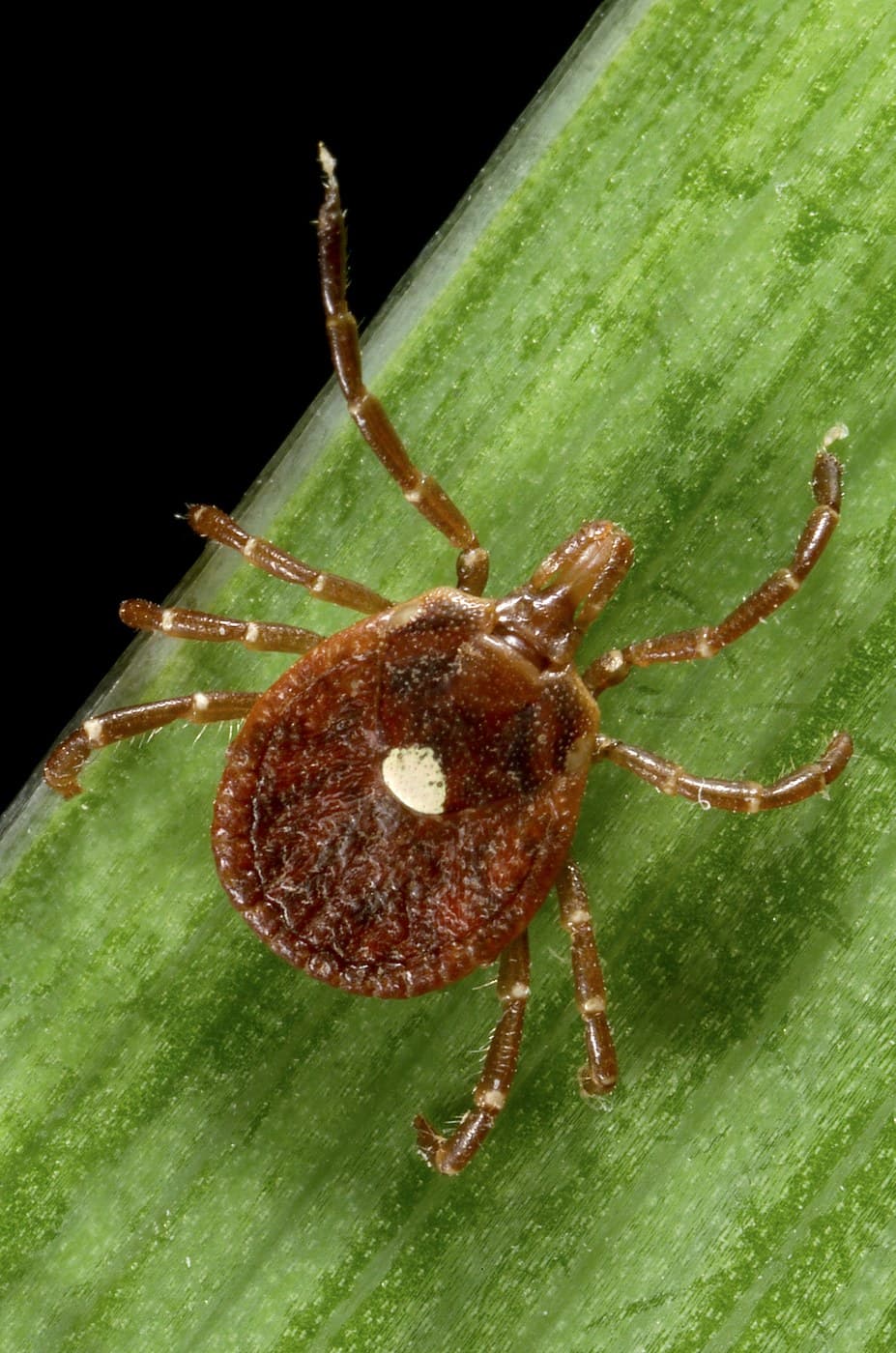
Amblyomma americanum
Established in Kansas
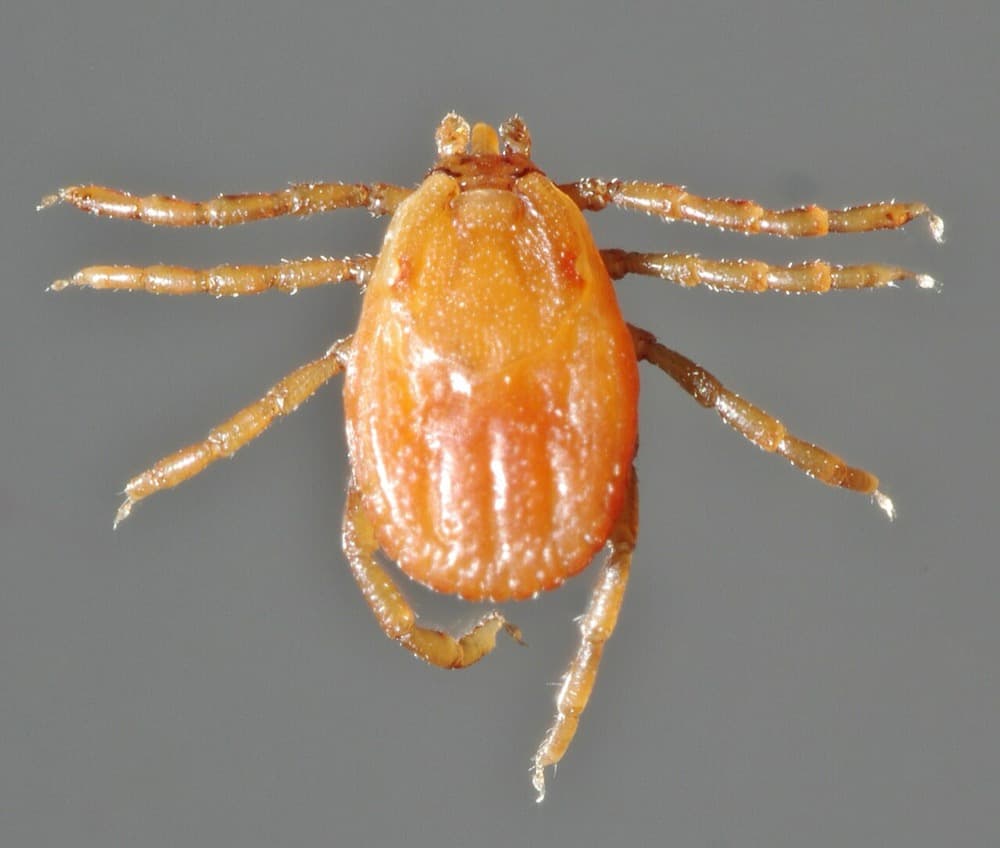
Rhipicephalus sanguineus
Found nationwide, the one tick that infests homes and kennels indoors
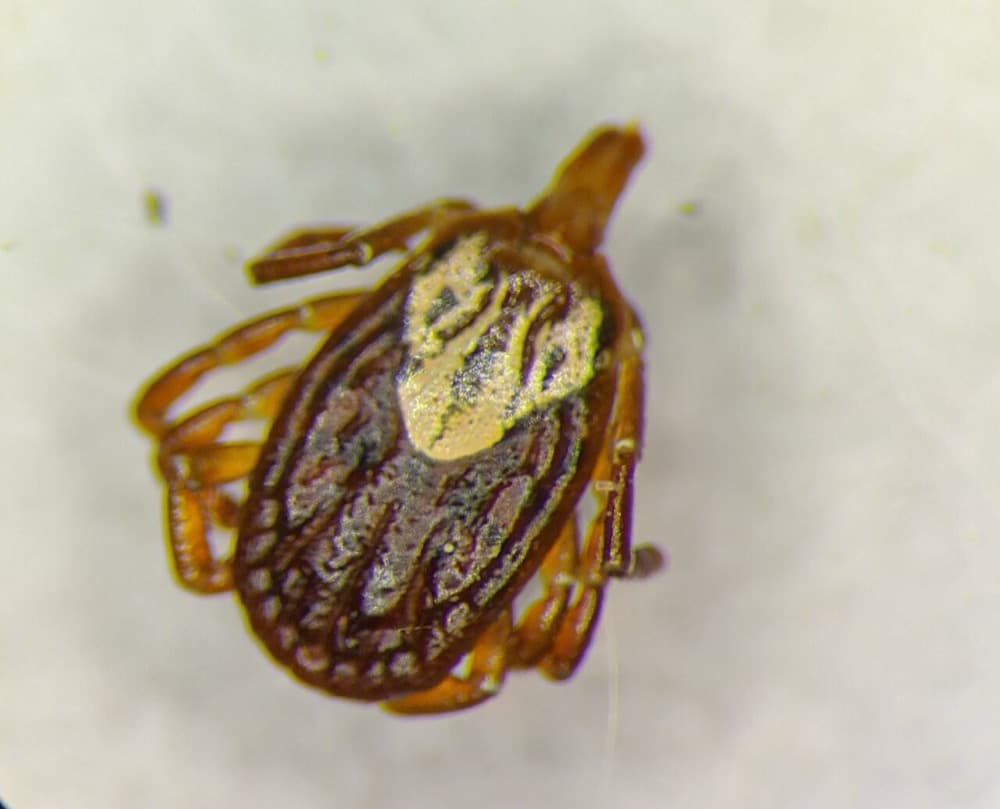
Amblyomma maculatum
A southern tick spreading north into the mid-Atlantic
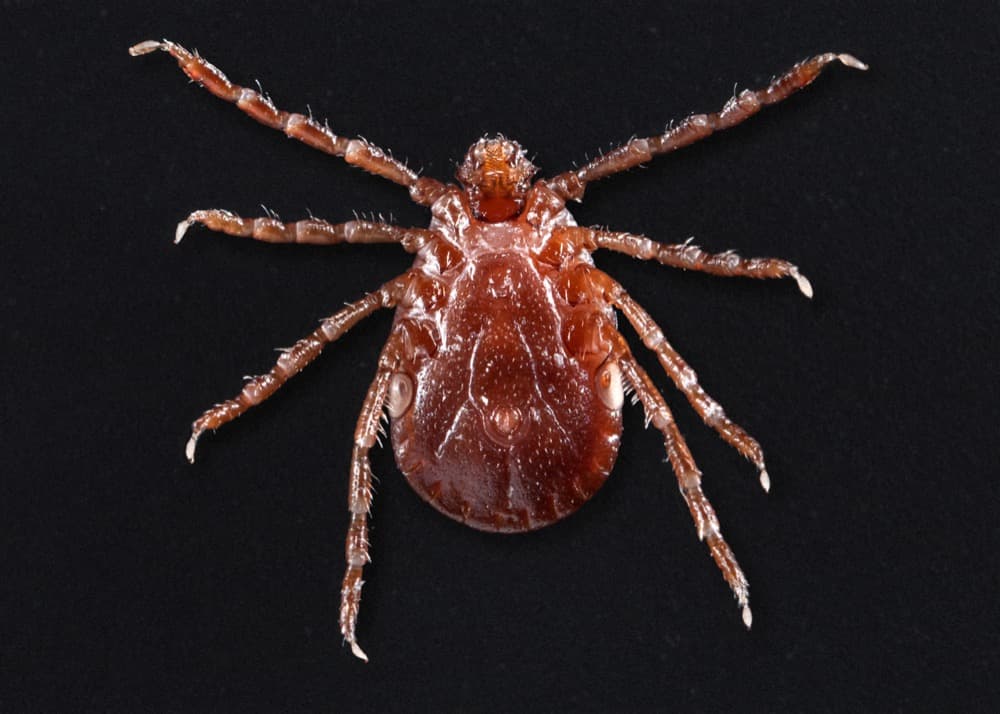
Haemaphysalis longicornis
A newer arrival, established in the mid-Atlantic and spreading north
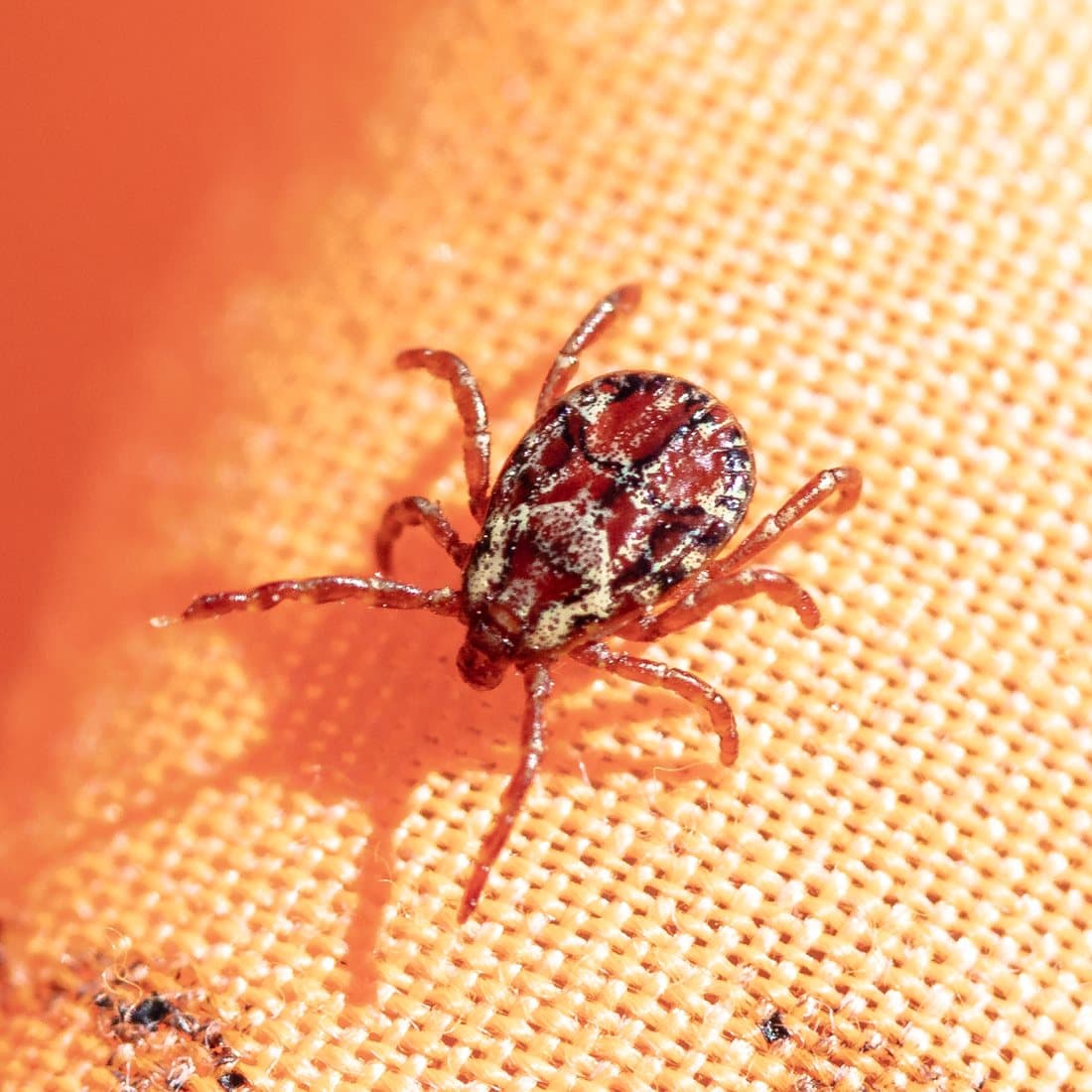
Dermacentor andersoni
Not established in Kansas
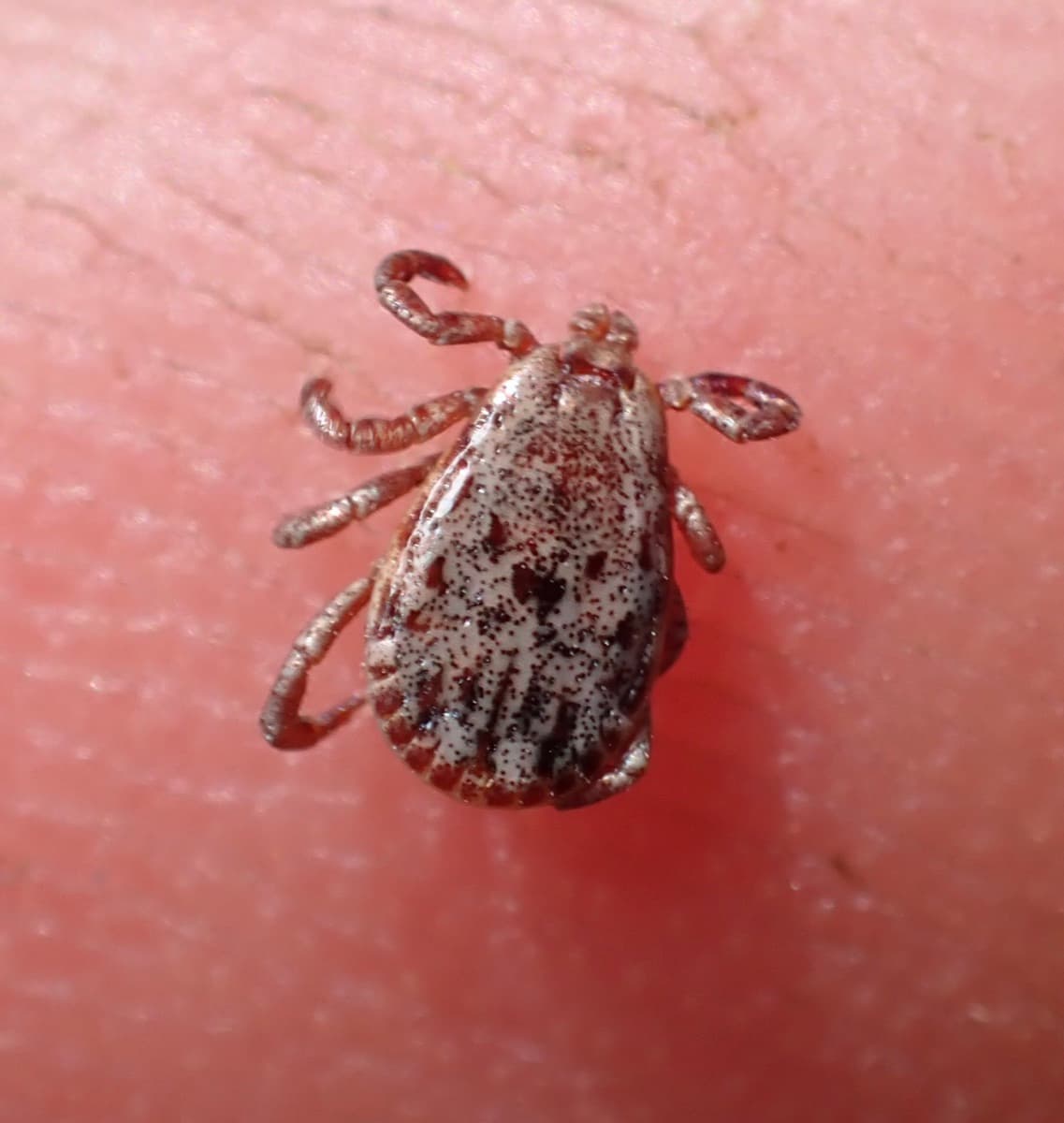
Dermacentor occidentalis
Not established in Kansas
Kansas establishment is shown for the three ticks CDC tracks by county; the others carry a regional range note. Source: CDC tick surveillance (ArboNET Tick Module), 2025. County surveillance is coarse: “not established” is a lack of records, not proof a tick is absent.
These are the three ticks CDC maps county by county, not the only ticks in Kansas: the brown dog, Gulf Coast, and Asian longhorned ticks are in the chart above. Tap a county for its daily tick-risk detail.
| County | Deer tick | American dog tick | Lone star tick |
|---|---|---|---|
| Allen County | Reported | Not established | Reported |
| Anderson County | Reported | Reported | Established |
| Atchison County | Not established | Not established | Established |
| Barber County | Not established | Reported | Not established |
| Barton County | Not established | Not established | Not established |
| Bourbon County | Reported | Established | Established |
| Brown County | Not established | Not established | Not established |
| Butler County | Reported | Established | Established |
| Chase County | Not established | Reported | Established |
| Chautauqua County | Reported | Not established | Not established |
| Cherokee County | Reported | Not established | Reported |
| Cheyenne County | Not established | Not established | Not established |
| Clark County | Not established | Not established | Not established |
| Clay County | Not established | Not established | Not established |
| Cloud County | Not established | Not established | Not established |
| Coffey County | Reported | Not established | Reported |
| Comanche County | Not established | Not established | Not established |
| Cowley County | Reported | Not established | Not established |
| Crawford County | Reported | Established | Established |
| Decatur County | Not established | Not established | Not established |
| Dickinson County | Not established | Not established | Not established |
| Doniphan County | Not established | Not established | Not established |
| Douglas County | Established | Reported | Established |
| Edwards County | Not established | Not established | Not established |
| Elk County | Not established | Not established | Not established |
| Ellis County | Not established | Not established | Not established |
| Ellsworth County | Not established | Established | Established |
| Finney County | Not established | Not established | Reported |
| Ford County | Not established | Not established | Not established |
| Franklin County | Reported | Not established | Established |
| Geary County | Not established | Not established | Established |
| Gove County | Not established | Not established | Not established |
| Graham County | Not established | Not established | Not established |
| Grant County | Not established | Not established | Not established |
| Gray County | Not established | Not established | Not established |
| Greeley County | Not established | Not established | Not established |
| Greenwood County | Reported | Reported | Established |
| Hamilton County | Not established | Not established | Not established |
| Harper County | Not established | Not established | Not established |
| Harvey County | Not established | Established | Established |
| Haskell County | Not established | Not established | Not established |
| Hodgeman County | Not established | Not established | Not established |
| Jackson County | Reported | Established | Established |
| Jefferson County | Established | Established | Established |
| Jewell County | Not established | Not established | Not established |
| Johnson County | Established | Reported | Established |
| Kearny County | Not established | Not established | Not established |
| Kingman County | Not established | Not established | Not established |
| Kiowa County | Not established | Not established | Not established |
| Labette County | Reported | Not established | Established |
| Lane County | Not established | Not established | Not established |
| Leavenworth County | Reported | Established | Established |
| Lincoln County | Not established | Not established | Not established |
| Linn County | Reported | Established | Established |
| Logan County | Not established | Not established | Reported |
| Lyon County | Not established | Established | Established |
| Marion County | Not established | Reported | Established |
| Marshall County | Not established | Not established | Reported |
| McPherson County | Not established | Not established | Established |
| Meade County | Not established | Not established | Not established |
| Miami County | Reported | Reported | Established |
| Mitchell County | Not established | Not established | Not established |
| Montgomery County | Reported | Not established | Reported |
| Morris County | Not established | Not established | Not established |
| Morton County | Not established | Not established | Not established |
| Nemaha County | Not established | Not established | Reported |
| Neosho County | Reported | Established | Reported |
| Ness County | Not established | Not established | Not established |
| Norton County | Not established | Not established | Not established |
| Osage County | Not established | Established | Established |
| Osborne County | Not established | Not established | Not established |
| Ottawa County | Not established | Not established | Reported |
| Pawnee County | Not established | Not established | Not established |
| Phillips County | Not established | Not established | Not established |
| Pottawatomie County | Reported | Reported | Established |
| Pratt County | Not established | Not established | Reported |
| Rawlins County | Not established | Not established | Not established |
| Reno County | Not established | Reported | Established |
| Republic County | Not established | Not established | Not established |
| Rice County | Not established | Not established | Not established |
| Riley County | Reported | Established | Established |
| Rooks County | Not established | Not established | Not established |
| Rush County | Not established | Not established | Not established |
| Russell County | Not established | Not established | Not established |
| Saline County | Not established | Not established | Reported |
| Scott County | Not established | Not established | Not established |
| Sedgwick County | Reported | Reported | Established |
| Seward County | Not established | Not established | Not established |
| Shawnee County | Reported | Reported | Established |
| Sheridan County | Not established | Not established | Not established |
| Sherman County | Not established | Not established | Not established |
| Smith County | Not established | Not established | Not established |
| Stafford County | Not established | Not established | Not established |
| Stanton County | Not established | Not established | Not established |
| Stevens County | Not established | Not established | Not established |
| Sumner County | Not established | Reported | Established |
| Thomas County | Not established | Not established | Not established |
| Trego County | Not established | Not established | Not established |
| Wabaunsee County | Not established | Reported | Established |
| Wallace County | Not established | Not established | Not established |
| Washington County | Not established | Not established | Not established |
| Wichita County | Not established | Not established | Not established |
| Wilson County | Not established | Not established | Reported |
| Woodson County | Reported | Established | Established |
| Wyandotte County | Established | Not established | Established |
Lone star ticks and alpha-gal syndrome
The lone star tick is established in Kansas in 32 of 105 counties (see the table above). Its bite can cause alpha-gal syndrome, an allergy to red meat.
Nymph deer ticks are the size of a poppy seed and cause most Lyme cases in Kansas because they are so easy to miss. When you check for ticks, look for the small ones too, especially in June and July.
Tick activity is local and changes daily. Pick your state for tick season dates, the species that live there, and a daily tick-risk score for every town.