The Pacific Coast Tick
Dermacentor occidentalis
The Pacific Coast tick is the most commonly encountered human-biting tick in California, living in chaparral, brush, and grassland from the coast into the foothills. Its bite can transmit Pacific Coast tick fever, a spotted fever that usually leaves a dark scab at the bite. It does not carry Lyme disease.
- Carries Lyme
- No
- Carries
- Pacific Coast tick fever
- Peak bite risk
- Late summer (immatures)
- Range
- California and southern Oregon
- Habitat
- Chaparral, brush, grassland
Quick facts
Diseases it can carry
Pacific Coast tick fever
Caused by Rickettsia philipii (the 364D strain) and transmitted mainly by the immature stages of this tick. The hallmark is a dark scab (eschar) at the bite, often with fever and headache. It is generally milder than Rocky Mountain spotted fever and responds to doxycycline.
Tularemia
This tick can also carry tularemia (Francisella tularensis), an uncommon but serious bacterial infection with fever and often an ulcer at the bite site. It responds to antibiotics.
It does not carry Lyme disease.
How to identify it
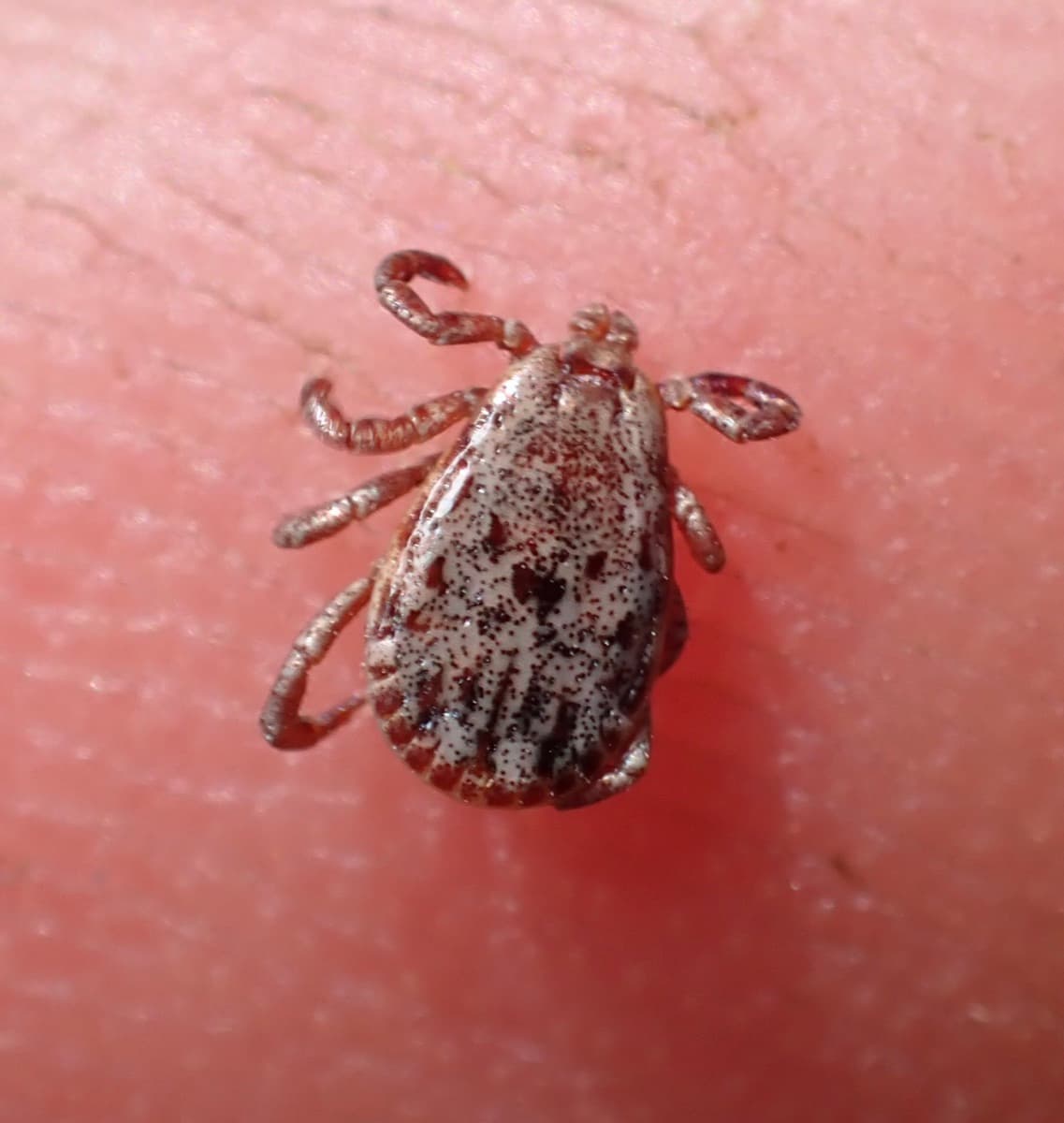
- Brown with a marbled silvery-gray ornate shield, similar to the American dog tick but the tick you meet in California brush.
- The larvae and nymphs, not just adults, readily bite people, which is unusual.
- Found in chaparral and shrubland, often picked up along trails through dry brush.
When and where
Adults are active from late fall through spring in California's mild climate, while the larvae and nymphs (the stages that transmit Pacific Coast tick fever to people) hold a late-summer bite risk. It is the most widely distributed tick in California, found in chaparral and shrubland from northern Baja up through the state and into southern Oregon.
Range in the Northeast
The Pacific Coast tick is a California specialty, the most widely distributed tick in the state, ranging from northern Baja California through California's coast ranges and foothills and into southern Oregon. Its stronghold is dry chaparral and shrubland, so it is a familiar tick to anyone who hikes or works in California brush.
Frequently asked questions
- Does the Pacific Coast tick carry Lyme disease?
- No. It does not spread Lyme disease. In the West, Lyme is carried by the western blacklegged tick, which lives in coastal woodland and forest, not the dry chaparral the Pacific Coast tick prefers. The Pacific Coast tick's main concern is Pacific Coast tick fever.
- What is Pacific Coast tick fever?
- A spotted fever caused by Rickettsia philipii and spread by this tick, mainly its immature stages. It typically leaves a dark scab at the bite along with fever and headache, is usually milder than Rocky Mountain spotted fever, and is treated with doxycycline.
- Where will I run into the Pacific Coast tick?
- In California brush. It is the most common human-biting tick in the state and lives in chaparral, shrubland, and grassland from the coast into the foothills, so it is often picked up along trails through dry brush from late fall through the following summer.